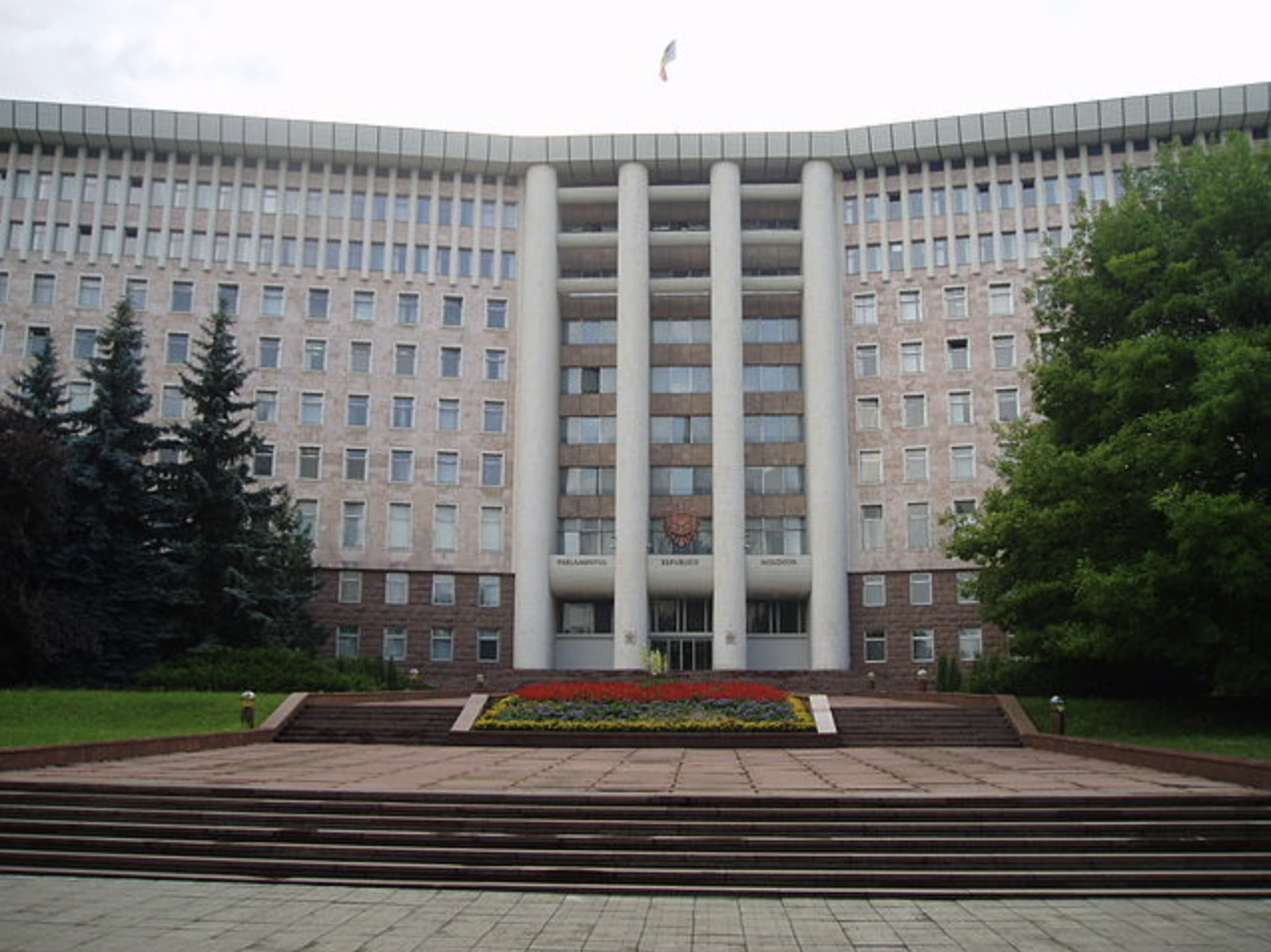
On September 28, Moldova’s incumbent Party of Action and Solidarity (PAS) won 55 out of 101 seats in the nation’s Parliament, occupying an absolute majority and bringing the country a step closer to a pathway into the European Union (EU). This result marks a continuation of Westernization efforts by President Maia Sandu, who had previously applied for Moldova’s EU membership in 2022. Despite the victory, the new government finds itself at odds with both pro-Russian citizens and the Kremlin itself, casting a shadow of uncertainty over the nation’s diplomatic future and risking another potential Ukraine-style Russian intervention.
Caught Between the Past and Future
A back-and-forth pattern between pro-EU and pro-Russian administrations can be observed throughout Moldova’s past, largely due to the enduring legacies of the former Soviet Union. Despite Moldova’s historically chaotic internal dynamics and reliance on Russian resources like gas, its 2014 signing of an association agreement with the EU, along with Russia’s forcible annexation of Crimea, swiftly put the nation at odds with Moscow and elevated tensions in the region. Moldova’s historical wedging between Russia and the West has remained a focal point in the nation’s political factions to this day. The latest election results have raised questions of a potential Russian intervention, especially given Moldova’s ongoing status disputes with its breakaway state of Transnistria.
Fraud, Disenfranchisement, and a Breakaway State
Despite the PAS’s legitimate parliamentary victory, the results of the Moldovan election did not come without controversy. Questions of Russian meddling were raised when an alleged secret network was uncovered ahead of the ballot, promising to pay participants to spread misinformation and pro-Kremlin propaganda. Some of these participants were supposedly paid through Promsvyazbank, a Russian state-owned institution with connections to Ilan Shor, a Moldovan oligarch exiled to Russia following major bank fraud charges in 2017. Along with cyberattacks and bomb threats, the PAS’s triumph was deemed by Parliament speaker Igor Grosu as a “[victory] against enemies of our country.”
Alongside claims of Russian interference, rumours of disenfranchisement began to emerge from the breakaway state of Transnistria following the elections. Historically a Russia-aligned region with secessionist ideals, residents of Transnistria reported steep logistical barriers to voting, citing a lack of voting stations within Transnistria or near its borders, and long queues at Moldovan checkpoints. Along with the alleged inaccessibility of polling stations for the Moldovan diaspora located in Russia, these issues raised questions by pro-Russian groups over potential election violations due to the higher concentration of polling stations for Moldovans in other Western nations.
Weighing Russia’s Options
The current sentiments between Moldova and Russia are almost uncannily reflected in the previous Russia-Ukraine clashes, as both countries have sought to align themselves with the West and integrate breakaway pro-Russian territories into their states. Based on these similarities, Russia’s next steps regarding Moldova and Transnistria may be reflected in their actions towards Ukraine and Crimea more than a decade ago. Transnistria itself has previously held referendums for annexation by Russia in 2006, and repeatedly sought Russian protection from supposed human rights violations within the territory. These concerns bear striking similarities to those once posed by the Donetsk and Luhansk regions, which declared independence in 2014 with the help of Russian militia. These events would later help Russia legitimize its full-scale invasion of Ukraine in 2022, highlighting concerns that Transnistria is headed down a similar path of instability.
Differing frameworks for international relations suggest distinct answers regarding the likelihood of a Russian annexation. From a realist perspective, where state security trumps all other concerns in anarchy, a potential annexation could be seen as a form of power maximization. With Moldova’s newly elected government turning away towards the EU for support, Russia may feel pressure to balance this power shift by dragging Transnistria closer into its sphere of influence, acting in line with John Mearsheimer’s offensive realism theories. According to Mearsheimer, great powers seek to eliminate challengers by establishing and maintaining regional hegemony, and offensive action is often seen as a rational strategy to maintain this security. Following this perspective, assuming international actors do not intervene, Russia would rely on its current status as the regional hegemon to ensure its actions cannot be directly challenged. This would heighten regional tensions and raise international concern in the region, but likely avoid a major conflict with the new Moldovan government.
In contrast to the realist perspective, the liberal viewpoint suggests that Russia will refrain from any drastic action regarding Moldova. An annexation of Transnistria would be seen as a violation of liberal international norms, leading to collective resistance by intergovernmental organizations (IGOs) such as the EU. Under this structure of increased emphasis on IGOs in policy decisions, the diplomatic and economic costs would likely be too large for Moscow to undertake an annexation. If precedent is taken from Russia’s ongoing conflict with Ukraine, the rally effect gained from the support of the Transnistrian and Russian populace would likely still be insufficient to outweigh Moldovan retaliation and international backlash in the liberal world order.
Moldova’s Danger to Russian Authority
Overall, the PAS takeover of the Moldovan parliament will likely produce a lose-lose situation for Russia’s status as a great power in the international system. It is unrealistic for Russia to annex Transnistria through a purely realist justification, as the very union of states Moldova is bringing itself towards is also the enforcer of the liberalist regional order in Europe. Any sizable action could result in a counterbalancing effort by European states that Moscow would likely be unprepared to deal with. However, Russia’s inaction may also lead to a loss of regional power, as the Russian sphere of influence would continue to diminish amongst the former Soviet states in Eastern Europe. Continuous inability to reclaim legitimacy could result in the bandwagoning of the rest of the Eastern European states, leading to Russia’s decline as a regional hegemon.
Considering Russia’s tight circumstances for retaining regional leverage, Moldova’s position is more secure than one might initially perceive. As long as the EU reciprocates its interests, Moldova’s newly elected government will likely be able to continue its pro-Western direction with a relatively low risk of direct Russian confrontation. Thus, the onus is on the EU to reciprocate any pressure Russia enacts to both keep the PAS in power in Moldova and maintain the delicate balance of peace in Eastern Europe.
Edited by Matteo de Campos Mello Grijns
The argument defended in this article is solely that of the author and does not reflect the position of the McGill Journal of Political Science, the Political Science Students’ Association, or the McGill Department of Political Science.
Featured image obtained through wikicommons
