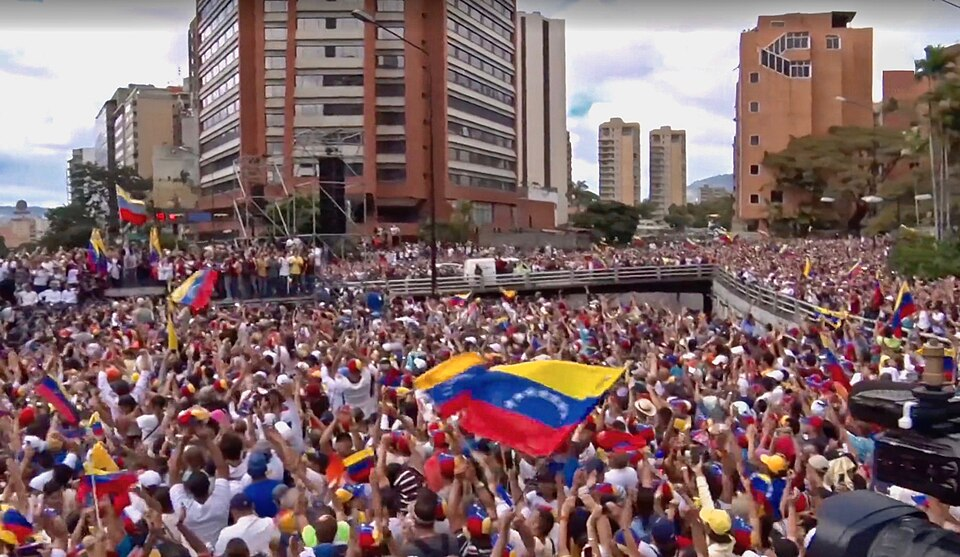
On October 25, 2026, Venezuelan opposition leader and Nobel Peace Prize recipient Maria Corina Machado returned to the country after a ten-month exile. She had previously gone into hiding following the disputed 2024 presidential election, in which Nicolás Maduro claimed victory amid widespread allegations of electoral fraud. Despite former support for Ms. Machado, U.S. President Donald Trump’s administration has expressed disapproval of this return and blocked her attempts to enter Venezuela in the aftermath of the devastating earthquake that struck the nation in June. Ms. Machado’s return to Venezuela could mark a turning point in Washington’s influence over the country, as her widespread popular support stands in stark contrast to the American-backed interim government, whose constitutional legitimacy remains widely questioned. With this prospect, Washington faces a dilemma: Should it insist on preserving the transitional government to pursue its interests in Venezuelan oil, or allow elections to expedite the transition of the nation towards a stable democracy? Despite the lucrativeness of preferential oil agreements under the transitional government, the United States would be wise to preserve the legitimacy of future Venezuelan governments, as when the nation’s government inevitably changes, long-term benefits can be better reaped.
Washington’s Current Course of Action
As outlined by Secretary of State Marco Rubio following U.S. intervention, the American approach to the transition of the Venezuelan government consists of a three-part process of stabilization, recovery, and transition. Even in the immediate aftermath of President Maduro’s capture, the Trump administration cast aside Ms. Machado, the most glaring alternative to the existing Chavez-era socialist system known as Chavismo. Washington instead chose to pursue a strategy of stabilization, leaving existing institutions intact and appointing former Vice President Delcy Rodriguez as interim leader to avoid further confrontation. With the new government successfully avoiding immediate hostilities, the first part of Mr. Rubio’s plan could be considered complete, albeit at the expense of sidelining the domestic opposition.
While Washington’s initial efforts to stabilize Venezuela and oversee an orderly transition of power proceeded smoothly, the American approach to economic recovery in Venezuela has fallen short in comparison. The U.S.’s first step was to move away from the Chavismo-era policies of aggressive oil field nationalization, which caused foreign direct investment (FDI) to tank due to former President Hugo Chavez reneging on existing contracts with private firms. Instead, Washington opted to lift restrictions on the control of foreign assets—allowing American companies to trade Venezuelan oil—and agreed to a major deal awarding close to sixty-four billion barrels worth of oil reserves to North American Blue Energy Partners (NABEP), in exchange for a thirty-five per cent stake in the company and the purchase of twenty per cent of its output at cost. However, many of the leased oil fields have little to no functional drilling infrastructure, making NABEP’s target of producing one million barrels of oil per day financially infeasible, with experts estimating only ten billion barrels produced over the next twenty-five years.
Shortcomings in Financial Reconstruction
Although the Trump administration’s actions in the Venezuelan oil sector’s recovery have piqued interest among multinational corporations, any windfall generated has yet to translate into meaningful improvements in Venezuelans’ living standards. Although consumption has slowly made a resurgence, and microcredit lending has led to limited increases in expenditure, these improvements only serve a small fraction of the populace. The average salary in Venezuela is still less than ten percent of an average European salary; the minimum wage has been frozen since 2022, and nine out of ten households experience power outages, with disruptions even extending to the capital city of Caracas. The vulnerability faced by civilians was exposed by the June 2026 earthquake, with over forty hospitals and one hundred primary care facilities damaged, limiting basic healthcare access. More than three months after the disaster, thousands of people are still displaced from their homes, highlighting the fragile state civilians live in, even following new reforms.
In addition to the American economic strategy of increasing FDI not generating proportionate economic gains for the average Venezuelan, the political transition process of Mr. Rubio’s plan has also been continuously restricted. Despite the Trump administration’s initial claims that their leadership would only last until a “proper transition can take place,” Washington’s efforts at a democratic transition have consistently been marred by ambiguity. In the transitional government structure, Ms. Rodriguez has repeatedly failed to specify a date for when elections could be held, leaving the potential spark for a democratic transition ambiguous. Moreover, the true reins of power in the Venezuelan government are practically held by Mr. Rubio and Washington, as public revenues are collected by the U.S. Treasury and disbursed to Venezuela through banks. Although this system comes with certain benefits, such as security from corruption and unpaid creditors, it also gives Mr. Rubio complete leverage over Ms. Rodriguez’s financial decisions and allows the U.S. to prioritize its own goals of securing Venezuelan oil over the political transition of the nation’s governance. This sentiment of extreme American oversight has caused growing opposition locally in Venezuela. Protests have tripled from January to May of this year compared to the same timeframe in 2025.
Future Steps in Regime Transition
Ms. Machado’s return to Venezuela has brought the political and economic shortcomings of Ms. Rodríguez’s administration into sharper focus, further undermining the transitional government’s already fragile legitimacy as it faces renewed scrutiny from a prominent and widely supported opposition leader.
Since Ms. Machado’s return, the U.S. State Department has disclosed a potential timeframe for elections, with the establishment of a new electoral council following a new Supreme Court in December, after which a six-month election period would occur. Following this plan, Venezuela could potentially hold presidential elections in mid-2027.
In this context, the Trump administration should aim to schedule the election as soon as possible to mitigate its own legitimacy loss with both the Venezuelan populace and the future new government. In fact, sixty-two per cent of Venezuelans favor major changes to the political system within the next twelve months, highlighting the potential legitimacy issues American economic deals made under Ms. Rodriguez will face once a new government takes power. By hastening the democratic transition, the U.S. can mitigate reputational costs while keeping its foot in the door of the Venezuelan oil market, steering the nation towards becoming a solid political and economic ally for years to come.
Edited by Martín Rojas Remolina
The argument defended in this article is solely that of the author and does not reflect the position of the McGill Journal of Political Science, the Political Science Students’ Association, or the McGill Department of Political Science.
Featured image courtesy of wikicommons
