 2
2
 0
0
On November 4th, Finance Minister François-Philippe Champagne presented the first federal budget under the newly elected Liberal government. According to the Prime Minister, “Budget 2025: Canada Strong” aims to transition the country’s economy towards self-sufficiency and strives for resilience against global shocks. However, as always, these aims come with sacrifices as the budget plans to offset costs with fifty-one point two billion dollars in cuts over the next five years. One of these sacrifices is the cut in international study permits by forty-nine per cent for 2026, which now reduces the number of permits from three hundred five thousand to one hundred fifty-five thousand.
Although these cuts are not directly affecting Canadians, their effects have and will continue to harm both Canadian institutions and their students. As international students are a crucial part of the universities’ revenues, there have already been severe drawbacks on programs, staff, and resources in 2025. In 2026, these effects are expected to worsen, due to the cuts, and schools may eventually need to find ways to reduce their high financial reliance on international students.
Financial Reliance on International Tuition
Financially, international students are a crucial part of Canadian universities and the general Canadian economy. In 2022, a total of thirty-seven billion dollars were put into the Canadian economy by international student expenditures, this includes tourism and spending by visiting families. On average, international students attending a University pay fifty-three thousand eight hundred dollars a year for tuition and living expenses. When comparing this to domestic tuition, international students pay about four times more than Canadian students.
Overall, this means provinces rely heavily on international tuition revenue, especially in provinces like Ontario, which hosts fifty-one per cent of the country’s international students. Approximately seventy-six per cent of tuition fees in the province come from international students. Students from India alone contributed two billion dollars in operating revenue to Ontario during the 2023-2024 school year. This figure is higher than what the province’s government provides to these schools.
Immediate Consequences for Canadian Universities
How exactly have these cuts affected post-secondary institutions thus far? The number of new international student arrivals from January through August 2025 decreased to eighty-nine thousand, down from two hundred twenty-two thousand in the first year of the original study cap. In Ontario’s college system alone, at least eight thousand people have lost their jobs, and over six hundred programs have been closed or suspended. It follows that colleges have reduced spending by one point eight billion dollars. Accordingly, with the recent cut in permits, steps will need to be taken to further reduce spending.
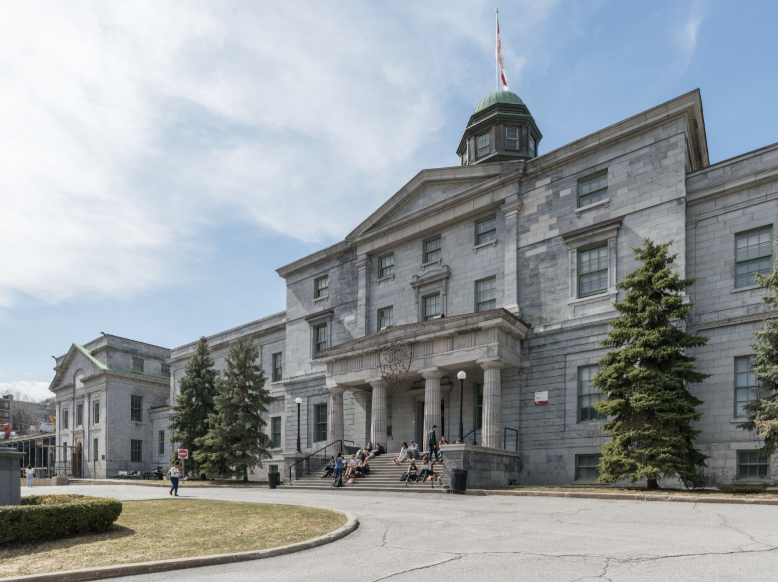
However, these cuts do not only cause financial concern, but also notably lessen research and development potential. In a release published by Montreal Gazette, McGill stated that international students are of tremendous value due to their contributions to research, and the school is committed to retaining the best and brightest talent. McGill has the highest percentage of international students of any research university in Canada, with about thirty percent of the student body being from outside the country.
David Robinson, Executive Director of the Canadian Association of University Teachers (CAUT), has raised concerns about the impact of the loss of graduate students who serve as teaching assistants and research assistants, positions that are essential for the functioning of university research and undergraduate education. Robinson further noted the inconsistency in the government’s approach. While international students are being restricted, Canada has simultaneously introduced a fast-tracked pathway for H1B visa holders from the United States to immigrate to Canada without a job offer. The goal of this initiative was to “strengthen Canada’s innovation ecosystem” and address talent shortages in various sectors, including research. However, this raises a contradiction. While Canada is making it easier for employees through the H1B program, the country’s policies on international students have now set back this “innovation ecosystem” by creating thousands of job losses and limiting potential research talent at schools like McGill.
Quebec’s Immigration Policies Deepening Impact
Although the federal government’s study permit cap has been the dominating issue in the lack of international students, on a provincial level, Quebec’s role on immigration must also be considered. As immigration in Canada is a shared jurisdiction under section 95 of the Constitution Act of 1867, this means both the federal and provincial governments hold authority over this matter. Quebec, however, has long fought for greater control over who enters the province, and has been able to negotiate distinct agreements such as the Canada-Quebec Accord of 1991. As a result of these negotiations with the federal government, Quebec has authority to play a significant role in shaping the flow of international students to universities within the province. This influence is framed as a way of preserving “demographic importance” and the “distinct identity” of Quebec.
For institutions like McGill, this shared authority complicates the effects of the federal cap. In recent years, the Legault government has pursued a series of measures tightening its own control over higher education and the entrance of international students. Since 2023, Quebec has introduced legislation like Bill 74, directly affecting anglophone universities’ ability to attract and retain international students. Adopted in 2024, Bill 74 gave the Quebec government additional power to restrict foreign students’ access to higher education. Through this bill, the minister of higher education and the minister of education are granted authority to limit or cap admissions of international students by institution, program, level of study, or region. These policy moves by the Quebec government have added more fuel to the fire and created further difficulties for institutions reliant on out-of-country students.
Searching for Stability in a Changing System
With another sharp reduction in study permits planned for 2026, Canadian universities now face a period of uncertainty. Over the next year, institutions will need to make difficult decisions about which programs can remain viable and how to stabilize their finances while taking into account the decline in tuition revenue that once sustained them. However, solutions are possible, and out-of-the-box thinking could help these schools in this time of financial uncertainty. Schools such as the University of Toronto have found ways to balance their budgets with the decreasing number of international enrolments. For example, it has increased summer enrollment, which generated nineteen million dollars more than projected. Domestic demand has also increased, with an overall student enrollment boost of two point nine per cent. At the University of Toronto Scarborough, new health programs and targeted recruitment efforts have been especially helpful in continuing to increase domestic enrollment.
Although these efforts are a step in the right direction, universities across Canada cannot simply rely on returns from these investments to generate revenue. The University of Toronto’s vice-president of operations and real-estate partnerships, Scott Mabery, states, “The solutions for any new initiatives [will] come from cost-savings rather than [finding] new revenue. Unfortunately, what was once a thirty-seven billion a year industry, one way or another, will have to adapt to this new reality.”
Edited by Catvy Tran
The opinions expressed in this article are solely those of the author and they do not reflect the position of the McGill Journal of Political Science or the Political Science Students’ Association.
Featured Image by Daniel Vorndran


