 1
1
 0
0
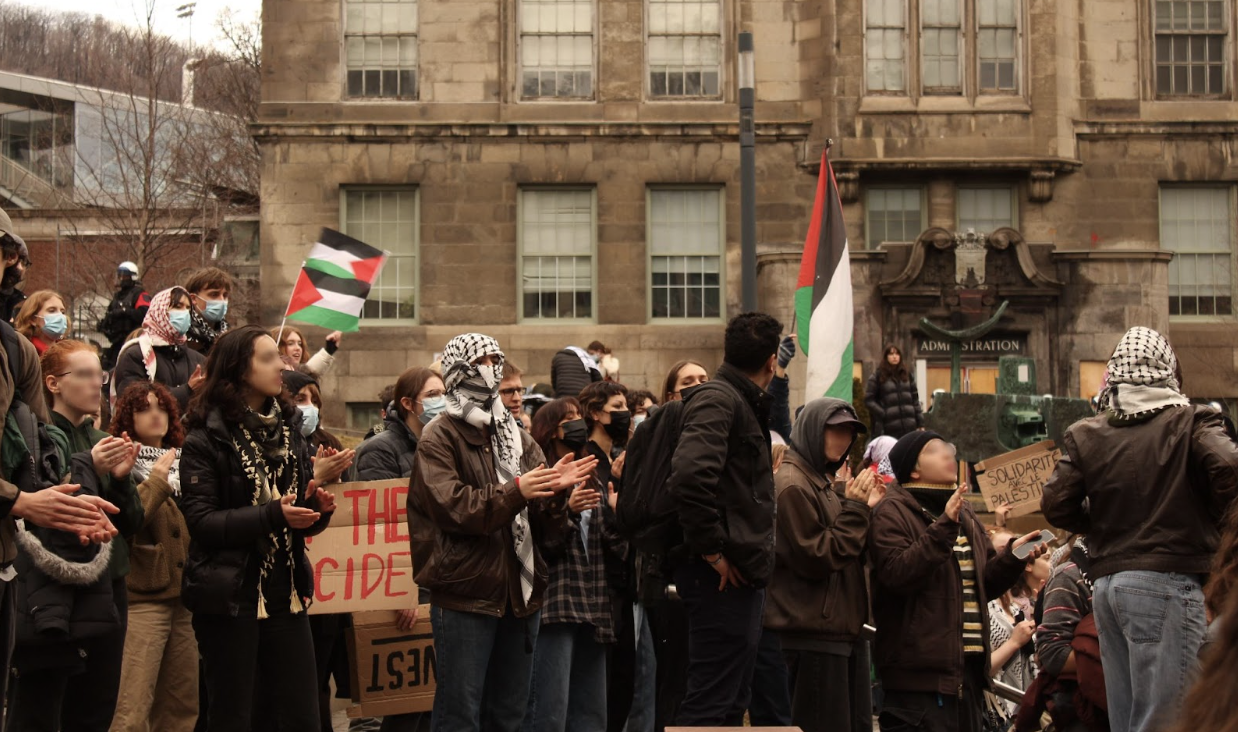
Student activism on university campuses has, in general, followed a ‘script’, especially identifiable throughout the recent past: Student advocacy groups organize a large protest, university administration duly responds with a dispassionate email urging ‘nonviolence’ and ‘moderation’, the protest arrives on campus to meet a heavy police presence, conduct may or may not become violent, and the crowd is forcibly dispersed. The university may also seek legal action against protestors on campus, claiming to be in the service of its ultimate commitment to academic freedom.
While maintaining an environment conducive to civil discourse is clearly a critical aspect of a university’s duty to protect academic freedom in its relation to freedom of expression1, it appears that a particular conception of this political engagement dominates the academic environment. This privileged conception—rather than fostering openness and exchange—flattens the terrain of democratic contestation by exhorting members of the community to engage with ‘civil discourse’ rather than ‘threats’ or ‘intimidation’. In this way, the university, especially, can ignore inconvenient issues raised by students through a wholesale labeling of popular dissent as incivility rather than legitimate political expression.
One must therefore ask the question: Does the civil discourse promoted by institutions truly represent the definition of the term? Hence, it is important to understand the nature of civil discourse, its vulnerabilities, and how its most authentic form can be promoted across university campuses.
Civil Discourse and the University
Civil discourse is a concept that sits at the intersection of liberal and democratic ideals.2 On the one hand, participating in civil discourse exemplifies the democratic principles of equality and popular sovereignty. Yet, on the other, the forms and content of engagement are regulated by the liberal grammar of liberty and individual rights.
The term “civil” in “civil discourse” does not merely imply a form of conversation that is polite, tranquil, or docile. In the context of civil discourse, “civil” is taken in the sense of “civic”: an exchange that is, above all else, centered on a sense of common political participation—towards the redress of popular grievances. As such, while the conversations ought to remain civil, their content is inherently predisposed towards contentious—often inflammatory—subject matter. As political theorist Benjamin Barber explains, “[civil discourse] is civil society’s special form of power”, through which dialogue “sets the agenda for common action and provides the language through which a community can pursue its goods”.3 Thus, civil discourse does not describe a trivial project of deferential conversation, nor a platform in which ‘moderation’, as such, should be centered over real discussion. Rather, civil discourse is really the form of public engagement through which a society seeks to identify and seek solutions to important common issues.
Academia—and by extension, the university—is widely considered a central part of civil society, and thus an invaluable forum for civil discourse. The university is not just a place to learn the technical skills one might use in a future profession; it is a venue to interact with new ideas and exercise one’s abilities to think critically through engagement with peers and professors. Therefore, the university can be conceived of as a public space in which the pursuit of knowledge, cooperation, and, necessarily, open dialogue are prioritized. Hence, universities have traditionally taken a stance of institutional neutrality—taking no side in an argument and stepping back from the issue—as a form of noninterference with this dialogue and civil exchange as an impartial body.
McGill’s administration and the past two years of genocide in Palestine is a salient example of how institutional neutrality is problematized as a strategy to encourage civil discourse. McGill’s claim to ‘neutrality’ on Palestine—implemented by the administration declaring they abstain from taking a stance—is a position in and of itself, hardly a withholding of one. Neutrality, which is in effect impartiality, seems always to tend to one side. Although violence and intimidation are certainly reprehensible, institutional ‘neutrality’ couched in language centred on ‘keeping the peace’ threatens to de-fang civil discourse. Consequently, ‘civic’ discourse–characterized by dynamism, responsiveness, and confrontations with uncomfortable issues–becomes more like ‘civil’ discourse, prioritizing ‘balance’ and ‘politeness’ over real political engagement. While McGill filed injunctions expressly aimed at blocking protests, and defended the necessity of taking these measures by qualifying protests through language as nonspecific as ‘disturbing the peace’, in effect, this limits the legitimacy for public engagement that true civil discourse might have mitigated in the first place. Therefore, this instance of institutional neutrality can rather be interpreted as an infringement on the very freedom of expression and toleration that democratic engagement seeks to enshrine.
Examined through the lens of civil discourse, this tension exemplifies the inherent contradictions between liberalism and democracy, summed up by political theorist Iris Marion Young’s idea of the ‘impartial civic public’. Young employs this framework to propose a practice of civil discourse that explicitly apprehends its tensions as problems rather than defects of impartiality and neutrality, and, altogether, promotes the recognition of particularities, ultimately working towards inclusive political communication.
Problematizing Neutrality: The Logic of Identity
Probing the tensions inherent to civil discourse requires a reference to the criticism of liberal democracy itself. While, according to the democratic ideal, engagement in civil discourse occurs on the grounds that we are all equal in our political capacity as citizens, a clear tension emerges when some forms of engagement seem to infringe on others’ liberties—for example, freedom of expression. As such, the convention of institutional neutrality emerges to create an environment in which both scrutinizing political demonstration and inherent individual liberty can simultaneously thrive: a place where the forum of public debate is impartial in order for citizens to feel secure in expressing their opinions.
Iris Marion Young labels this conception ‘the impartial civic public’ and centres this as an issue for which inclusive political communication can be a solution. For Young, the most threatening implication deriving from conceiving of the public as impartial—through what is termed the ‘logic of identity’ is that it closes avenues toward addressing social exclusion and the systems of oppression that they originate from. The logic of identity “denies and represses difference” precisely because rationality becomes the standard of universality—it “seeks to reduce the plurality of subjects, […] their perspectival experience, to a unity, by measuring them against the unvarying standard of universal reason”.4 In Young’s view, the logic of identity also creates a dichotomy between reason and feeling, which not only abstracts people from the particularities that inform the subjectivity of their experiences, but also necessarily the motivations behind their reason. This is the second failure of the universalist scope underlying impartiality because, as Young underscores, “feelings, desires, and commitments”—all originating in particularities—“do not cease to exist and motivate just because they have been excluded from the definition of moral reason”.5 Thus, the logic of identity is an exclusionary one, and in excluding all those who do not conform to its rational universal standard, delegitimizes those agents and arguments.
Political theorist Chantal Mouffe goes even further than Young in interpreting the implications of neutrality understood as the logic of identity. Beyond the exclusion and delegitimization of the causes and concerns of marginalized groups, Mouffe argues that subscribing to neutrality as the universal standard for engagement also strips us of the ability to question the very systems of power themselves.6 Political issues are, by nature, controversial. But by putting the need for a ‘consensus at the centre’ above addressing urgent and polarizing problems, we are limiting ourselves to empty and formalistic negotiations rather than renegotiating power. Simply put, we are depoliticizing politics.
An Intervention: Young’s Inclusive Political Communication
We can focus on Young’s analysis to understand exclusion in finer detail, and in turn, the innovation she constructs to address it. According to Young, the logic of identity that underpins universal moral reasoning creates two kinds of exclusion: external exclusion, which describes how people are “kept outside the processes of discussion and decision-making”7, and internal exclusion, a narrower concept that privileges the form and content of discussion in democratic contexts. Internal exclusion describes a “lack of effective opportunity” to influence the views of others despite access to decision-making procedures.8 Internal exclusion seems especially relevant to our discussion of civil discourse, as institutional neutrality in this context does not necessarily cover who can or cannot participate in civil discourse, but the content and type of engagement or speech that are acceptable.
To address this exclusion, Young proposes greeting as the first part of inclusive political communication—literally, public acknowledgement between interlocutors. This is a powerful tool; by greeting someone, not only do you acknowledge another person in their particularity, but there is also an implied sense of vulnerability and responsibility. At its most basic level, greeting is one person saying, ‘Here I am’, and the other person replying, ‘I see you’.9
The next part of Young’s innovation is rhetoric. While the logic of identity decries the use of rhetoric in arguments as contrary to reason, even going so far as to describe rhetoric as manipulation,10 Young highlights how no form of speech is devoid of rhetoric. In her words, “rhetoric concerns the way content is conveyed as distinctive from the assertive value of the content, but this does not imply that the content has the same ‘meaning’ in various rhetorical contexts”.11 Rhetoric is therefore valuable as it communicates the importance of a particular issue, which in deliberative democratic contexts, gets issues onto the agenda. By providing contextual framing, rhetoric moves the democratic subject from reason to judgement, infusing democratic engagement with a necessary element of normativity.
Young’s final innovation, narrative, addresses the exclusionary aspect of the logic of identity insofar as it erases particularities in search of an objective (common) platform for engagement. Stories, or accounts of experiences, are useful parts of political communication because they serve to create a set of shared understandings on which an argument with shared premises, or appeals to shared experiences or values, can be made. Narratives not only address situations in which people lack the specific language to describe injustices to those who may not have experienced these injustices, but also allow people who share experiences to articulate their collective affinities.12 It is therefore only a form of civil discourse that rejects all notions of impartiality—one being neutrality—that can, on the other side of the same coin, accept political narratives as what they are: political.
Civil Discourse as Inclusive Political Communication
Naturally, there are limitations to applying Young’s strategies of greeting, rhetoric, and narrative to the context of neutrality as imposed by and through an institution—by definition disembodied from a particular person. But while one cannot ‘talk’ with McGill, as McGill students, we can talk with one another. Perhaps the ethics of inclusive political communication can provide administrators and community members with a framework to move beyond an exclusive impartiality and engender real, sustained civil discourse, one that is truly oriented toward the public and works to make differences apparent.
Edited by Martín Rojas Remolina
The opinions expressed in this article are solely those of the author and they do not reflect the position of the McGill Journal of Political Science or the Political Science Students’ Association.
Featured image by Zoe Lee / The Tribune
- Jeffrey C. Sun, “Academic Freedom in US Higher Education: Rights Emergent from the Law and the Profession” (Encyclopedia 5, no. 2), 64, https://doi.org/10.3390/encyclopedia5020064. ↩︎
- Chantal Mouffe, The Democratic Paradox (Verso, 2000), 5. ↩︎
- “The Discourse of Civility,” in Citizen Competence and Democratic Institutions, ed. Stephen L. Elkin and Karol Edward Soltan (Penn State University Press, 1998), 40. ↩︎
- Justice and the Politics of Difference (Princeton University Press, 1990), 98-99. ↩︎
- Justice and the Politics of Difference, 103. ↩︎
- The Democratic Paradox, 15. ↩︎
- Inclusion and Democracy (Oxford University Press, 2002), 55. ↩︎
- Young, Inclusion and Democracy, 55. ↩︎
- Young, Inclusion and Democracy, 58. ↩︎
- See the Platonic distinction between rational speech and mere rhetoric: logos and pathos ↩︎
- Inclusion and Democracy, 65 [emphasis added] ↩︎
- Young, Inclusion and Democracy, 72-4 ↩︎


