 9
9
 0
0
Democratic collapse is not always sudden. While a coup d’état is a clear break, democracies can be subtly dismantled through processes that erode their foundational elements. Citizens often fail to recognize a state’s descent into fascism—a political movement defined by militarism and the suppression of individual rights—until they have lost the democratic power to counter it. This failure is compounded by the weakening of institutional checks and balances and a flood of disinformation that obscures the true nature of the threat. The core elements of fascism, such as intense nationalism and the popular mobilization of supporters against a designated “other,” are enabled by the systematic degradation of democratic institutions.
This process is illustrated by the fall of Germany’s Weimar Republic, where the state’s own democratic institutions were exploited to consolidate authoritarian power. The Nazi Party’s strategic manipulation of legal processes—entrenching its ideology within the government and securing loyalties across the civil service—enabled a shift to fascism that overwhelmed existing checks and balances. Though this institutional collapse unfolded in the 1930s, the pattern of democratic erosion can still be observed today.
The United States, despite being widely regarded as a democracy —one built on the foundational value of liberty—has recently shown symptoms of democratic backsliding that invite comparisons to Hitler’s Germany. These parallels—including potent nationalism, the ‘othering’ of minorities, propaganda, and deploying state agencies against the public—show that where democracy is fading, fascism is appearing.
Historical Precedent: Hitler’s Consolidation of Power
The nationalist ideology of the Nazi regime was an exclusionary, ethno-state vision rooted in the belief in a superior Aryan (white) race. Non-Aryans were framed as an obstacle to a true Germany that was racially pure and under authoritarian control. This classified groups of people who deviated from this vision as national threats, which justified their dehumanization, ethnicity-based deportation, and eventual extermination.1
Hitler’s supporters were united through national rallies and speeches. The administration employed subversive propaganda to foster extensive, unified support for discriminatory policies. For example, they blamed Jewish people for governmental failings, such as inflation, and claimed that Jewish immigrants had brought nothing except “infectious political and physical diseases.” The tactic of scapegoating was designed to erode the legitimacy of the state’s existing institutions, generating popular demand for their replacement with mechanisms of party loyalty and authoritarian control.
Hitler’s consolidation of power proceeded in a deliberate sequence. Following the Reichstag fire, the government passed the Reichstag Fire Decree in 1933, which suspended civil rights and freed agencies like the Gestapo from constitutional limitations. This was quickly followed by the Enabling Act, which allowed Hitler to enact laws without the approval of parliament or the president. With these two instruments, the legislative and judicial branches were neutralized. Over the following years, the police system was systematically “Nazified” which—combined with the loyalty of Supreme Court judges—created an executive force that could persecute and deport adversaries and minorities without legal justification.
Contemporary Comparison: the United States, Circa 2025
Parallels to this framework can be observed in the political strategies of the current Republican Party. For instance, the Trump administration’s rhetoric is characterized by white nationalist beliefs propagated through official social media posts that recall a great past and value white supremacy.
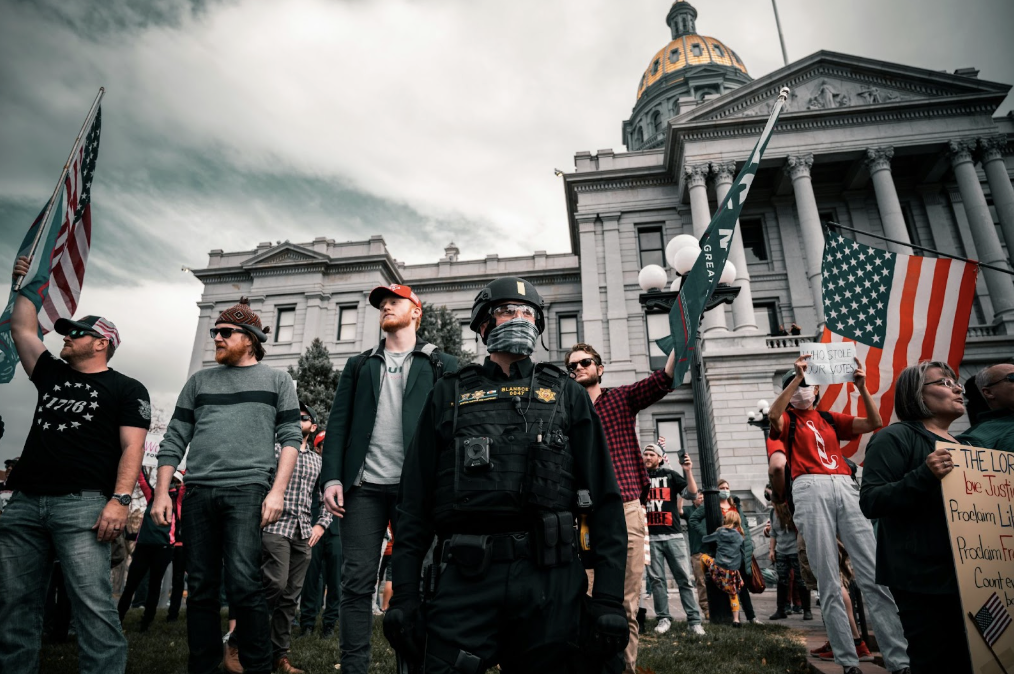
The mobilization of supporters based on disinformation posed a threat to constitutional order. This was exhibited on January 6, 2021, as thousands of protestors incited by claims of a stolen federal election stormed the United States Capitol to disrupt the democratic and peaceful transfer of power, challenging the legitimacy of the electoral process. Disinformation in political governance persists as the Trump administration has inaccurately blamed the current government shutdown, brought on by partisan disagreements over government subsidized healthcare, on Democrats. This tactic demonstrates directing public frustration toward targeted groups.
Additionally, the Executive Branch empowered the United States Immigration and Customs Enforcement (ICE) to accelerate arrests and deportations, targeting a wider range of individuals. Despite claims that ICE would only be used to detain and deport undocumented immigrants with criminal records, about 71.5 per cent of detainees do not have any criminal convictions. Under the Executive’s discretion, ICE has repeatedly undermined judicial rulings attempting to limit their authority, resulting in the detainment of U.S. citizens and the deportation of individuals that should be exempt from deportation. This bears resemblance to Hitler’s empowerment of the Gestapo, as Trump has expanded ICE’s power to deport individuals, even those granted legal protection. This expansion of executive power, which has created an enforcement agency increasingly protected from judicial review, parallels that of the role of the Gestapo in deteriorating checks and balances.
The Future of America Under Trump
The comparative analysis suggests that the erosion of democratic norms can and has paved the way for fascist rule. The United States’ long-standing democratic institutions are being tested by a playbook of propaganda, personalist politics, and scapegoating that has proven effective in other contexts. The primary implication is that the resilience of American democracy depends on its entrenched checks and balances—namely, an independent judiciary, a free press, and bipartisan legislative oversight.
Moreover, a crucial role is played by an informed society dependent on a free press that can counter disinformation. Political tactics that exploit this vulnerability often redirect American grievances by shifting blame onto political opponents and immigrants instead of addressing root causes. As long as these grievances persist, this strategy can maintain a base of public support in the hope of improving their standard of living. The future stability of the American political system may hinge on the public’s ability to recognize and counteract these patterns of internal erosion.
Edited by Jane Malek
The argument defended in this article is solely that of the author and does not reflect the position of the McGill Journal of Political Science, the Political Science Students’ Association, or the McGill Department of Political Science.
Featured image by Colin Lloyd, obtained through Unsplash
- The victims of systematic Nazi extermination policies extended beyond the Jewish people to include other groups deemed undesirable or enemies of the state. These included Roma and Sinti People, persons with disabilities, Slavic People, Black People, homosexuals, Jehovah’s Witnesses, and political opponents. ↩︎


