 0
0
 0
0
Mediterranean as a Climate Migration Frontline
The Institute for Economics & Peace predicts that 1.2 billion people could be displaced globally by 2050 due to the rise in extreme weather and natural disasters. This figure challenges us to fundamentally rethink migration policy, reminding us that our shared future will be defined not by the magnitude of the threat, but by the effectiveness of our response.
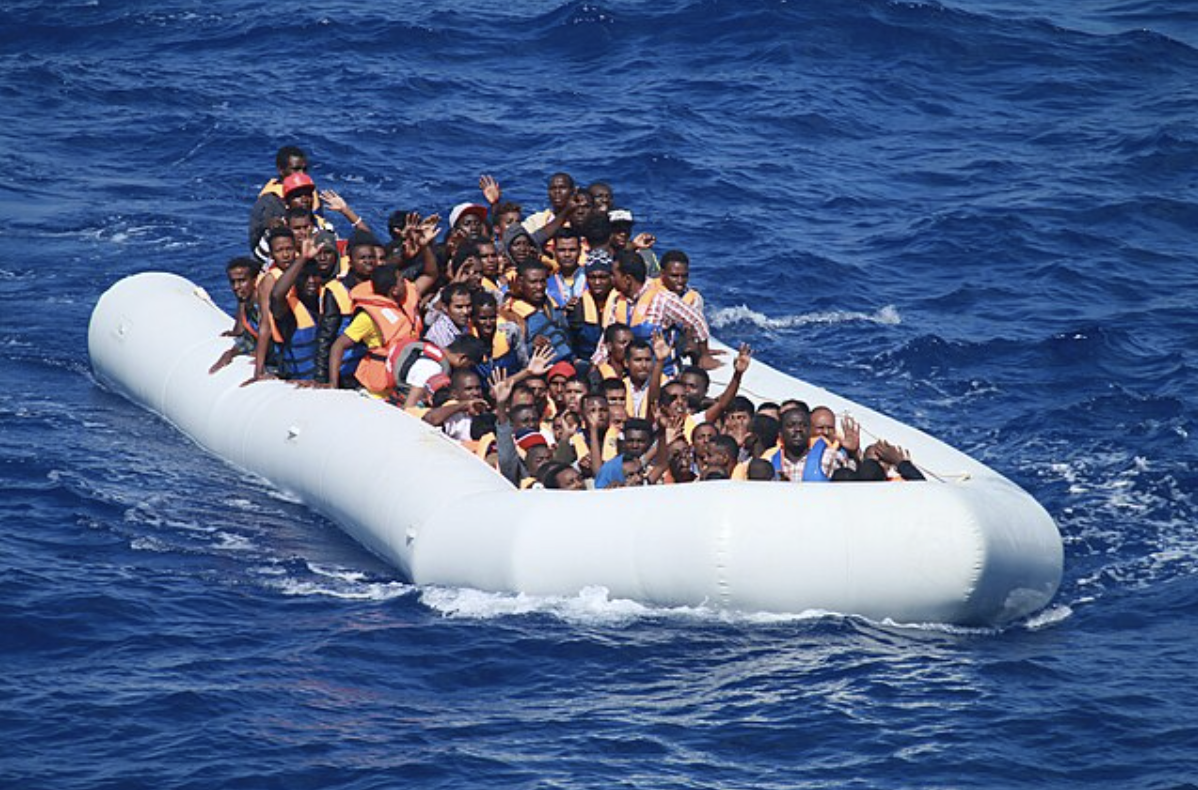
Nowhere is this tension more visible than in the Mediterranean basin, one of the world’s most active migration corridors. The European Union (EU) border agency Frontex reports that roughly 2.7 million people have crossed into Europe via Mediterranean routes over the past decade.
Across North Africa, the Sahel, and the Middle East, climate change is reshaping migration patterns by amplifying existing conflicts and insecurities. Environmental stress acts as a “threat multiplier,” deepening vulnerabilities in already fragile states and driving millions to move.
Climate Migration and Populism
Climate migration in European politics is not just an environmental issue, but also a cultural and security challenge. Jake Moran argues that climate-driven migration has become a new catalyst for populism in Europe, where the intersection of climate change and migration risks triggering both humanitarian crises and democratic strain.
Empirical research indicates that high levels of immigration can lead to right-wing populist backlash. Scholars show that widening inequality, globalized trade, and automation have left many people feeling economically and socially displaced. This sense of loss is a “fertile ground” for populist appeals. Right-wing populists seize on these frustrations by blaming immigrants, claiming they endanger national identity and security.
Italy, a Security Issue
In 2024, a survey revealed that 57.4 percent of Italians felt “threatened by those who want to create in our country rules and habits that are in contrast with the consolidated Italian lifestyle”.
Over the past three decades, immigration has moved from a marginal topic to a central theme in Italian politics. This trend crystallized under the populist coalitions of Matteo Salvini’s League and Giorgia Meloni’s Brothers of Italy party. Media coverage and government communication routinely describe migration as an unprecedented national emergency, reinforcing a sense of crisis even when numbers remain lower than in countries like Germany or France.
This narrative has translated into a hardline policy agenda, with Meloni’s government passing a series of restrictive measures targeting NGOs and asylum seekers. In mid-December 2022, the Italian government introduced a new practice in relation to the disembarkation of people rescued by NGO ships carrying out search and rescue operations. This policy narrowed their chances of survival during transit and subjected them to longer, precarious journeys.
Italy’s fear-based politics turns migration into a permanent security crisis, using emotional narratives of threat to justify restrictive measures and project control. Yet this approach, rooted in short-term populism, leaves the country ill-prepared for the structural and cooperative challenges posed by climate migration.
Greece and European Victimhood
In Greece, the politics of migration have unfolded very differently from elsewhere in Europe. Rather than framing migrants as cultural threats, Greek leaders often emphasize the strain on national institutions and the lack of European solidarity. The issue of migrants is seen as a collective European responsibility. This reflects what political scientist Anna Visvizi describes as Greece’s “politics of burden,” where overwhelmed local authorities and island communities shoulder the costs of European policy.
After the 2010 debt crisis, Greece endured years of austerity imposed by EU and IMF institutions, breeding deep resentment toward European elites. When the refugee crisis erupted in 2015, this sentiment of betrayal resurfaced. Greeks saw their islands overwhelmed by refugees with help from Brussels nowhere to be found. Domestically, migration is viewed as another example of Europe abandoning Greece to bear a collective burden alone.
Greece’s populism thus rests less on fear of “the other” and more on frustration with Europe’s failures. As climate change accelerates displacement across the Mediterranean, Greece’s frontline position may once again be tested. The question is whether it will remain a story of burden and victimhood or shift toward the politics of fear that have already reshaped much of Europe’s sentiment toward immigration.
The Futures of Climate Migration Politics
Between Italy’s politics of fear and Greece’s politics of burden, the latter is increasingly shaping migration debates across the Mediterranean. Research by the BRIDGES project shows that frontline states such as Greece, Italy, Spain, Malta, and Cyprus consistently describe migration as an unequal responsibility, with southern Europe “left with all the burden” of arrivals. This narrative identifies “villains” not among migrants, but among European elites and institutions that fail to deliver solidarity.
In contrast, Italy’s fear-based narrative is unlikely to spread to the rest of Europe. As the Mediterranean becomes a climate migration corridor, driven by environmental stress in North Africa and the Sahel, the challenge for frontline states is less about identity than capacity and governance. The politics of burden thus resonates because it reflects concrete pressures on infrastructure, economies, and local communities rather than abstract fears of cultural change.
For populism, this shift is significant. The burden discourse transforms populism from nativism toward anti-elite grievance, portraying southern Europeans as abandoned by Europe. As climate migration intensifies, this narrative may become the cornerstone of Mediterranean populism, sustaining resentment toward Brussels while normalizing a permanent sense of crisis.
A Mediterranean Mirror
How the future unfolds will depend less on the scale of climate migration than on how Europe chooses to narrate it. Italy and Greece embody two logics, fear and burden, that together reveal the limits of ad-hoc politics. As climate shocks intensify across the Sahel and Middle East, the Mediterranean will remain the moral and political mirror of Europe’s capacity to balance compassion with control.
Ultimately, the clash between Italy’s fear-based politics and Greece’s burden narrative exposes a deeper test for the European project itself. Without coordinated action, fear and resentment will harden into structural features. But with shared responsibility and forward-looking governance, Brussels can turn migration from a divisive threat into a foundation for renewed European solidarity.
Edited by Patrick Armstrong
The opinions expressed in this article are solely those of the author and they do not reflect the position of the McGill Journal of Political Science or the Political Science Students’ Association.
Featured image by Commander, U.S. Naval Forces Europe-Africa/U.S. 6th Fleet


