 0
0
 0
0
Introduction: Orban’s Assault on Democracy
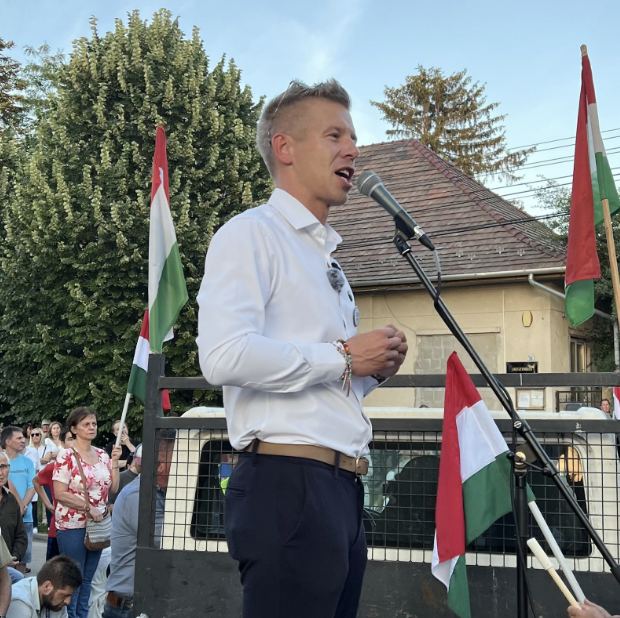
Viktor Orban became prime minister of Hungary following the 2010 landslide victory of Fidesz, his political party, which won two-thirds of the seats in parliament. Now entering his 16th year as prime minister of Hungary, Mr. Orban is facing an unprecedented challenge. This challenge comes in the form of Tisza, an opposition party that is polling with a slight lead over Fidesz, only months away from the next parliamentary election. Tisza’s leader is Peter Magyar, who serves as the face of Orban’s surging opposition.
Orban: Admittedly Illiberal
In 2014, Viktor Orban openly referred to Hungary under his leadership as “illiberal”, due to its rejection of full democratic transparency and free opposition. Nevertheless, critics have called his regime a “mafia state”. Indeed, Hungary under Mr. Orban experiences significant corruption, particularly in Mr. Orban’s provision of government contracts to members of his family – including his son-in-law, who is implicated in five fraud investigations, instigated by the European Union (EU).
Mr. Orban’s illiberal agenda saw him create a new constitution for Hungary which Human Rights Watch predicted would have “long-lasting adverse effects on fundamental freedoms and human rights.” One of the main concerns is the measures taken to define the “family” based on heterosexual standards, enshrining LGBTQ+ discrimination into the constitution. This was taken further in 2025 when a ban of LGBTQ+ pride events was enshrined into law.
Hungary’s relationship with the EU has been strained significantly by Mr. Orban. Mr. Orban’s illiberal tendencies conflict with EU principles, evidenced by the Court of Justice of the European Union case against his government for the discriminatory measures in his constitution. Additionally, contrary to the EU’s policy, Mr. Orban has deepened his ties with Russia. The state hosted the headquarters of the International Investment Bank (IIB) in Budapest, which US officials believe is an institution of Russian espionage. As a result, a significant amount of funding from the bloc to Hungary has been curbed.
Nevertheless, Mr. Orban seeks to maintain the democratic facade. Beyond the rewriting of Hungary’s constitution, Mr. Orban has leveraged frequent referendums, a tactical move to showcase popular support for his regime. These votes are often accompanied by misleading information propagated by the Orban government, attempting to sway the population in their favor.
Peter Magyar: A Change, but How Significant?
In the three elections Fidesz has won since their initial 2010 victory, the party has faced minimal significant challenges. It retained a two-thirds majority for almost all of its time in government, and saw its largest victory in the most recent 2022 elections, now controlling 135 out of 199 seats in parliament.
However, Mr. Orban’s dominance is shifting significantly with the rise of Peter Magyar, a former member of Fidesz, who has become Mr. Orban’s greatest political challenger. His rise comes as Mr. Orban’s popularity wanes, with criticism of his anti-democratic and corrupt practices compounding.
Mr. Orban and Mr. Magyar differ significantly in terms of their policy towards the EU. Mr. Orban has attempted to distract and weaken this alliance, particularly relating to action regarding Russia’s war in Ukraine. Meanwhile, Mr. Magyar asserted to Hungarians that “our place is in Europe,” highlighting his commitment to the alliance and the ideals that Mr. Orban rejects. A significant goal of Mr. Magyar’s campaign is to normalize relations with the EU, restoring access to the 18 billion Euros currently withheld from Hungary.
The EU additionally recognizes Mr. Magyar as a potential ally in rectifying its relationship with Hungary. The European Parliament – of which Mr. Magyar is a member – has been providing Mr. Magyar with legal immunity, as he is currently under investigation by the Orban regime for an alleged incident of vandalism. Some have noted that the investigation is excessive and politically motivated, with European Parliament member Daniel Freund claiming that it was a targeted “smear campaign” on behalf of Mr. Orban.
Structural Issues in Hungarian Politics: Post-Communist Challenges
Peter Magyar’s agenda provides a reprieve from Viktor Orban’s authoritarian tendencies, but comes far from resolving the deeper issues undermining Hungary’s democracy.
Academic research on authoritarianism in Hungary has underscored that while Mr. Orban did significant damage to democracy, structural issues were present prior to his rise. Emilia Palonen notes that a decade before Mr. Orban’s win in 2010, Hungary was increasingly politically divided, with politicians focused more on deriding their opposition than sharing their own political goals.
Palonen’s framework questions the impact that the election of Mr. Magyar would have on Hungarian politics and society. While she addresses an opening for a return to democracy, she notes the possibility that Mr. Magyar could simply replace Mr. Orban as an autocrat. Mr. Magyar claims to be a conservative himself, and he utilizes Hungarian nationalism in a way which calls into question how different he is from Mr. Orban. For instance, Mr. Magyar shares some of Mr. Orban’s skepticism about the EU, as he has voiced disagreement with EU policies such as the commitment made by the bloc to end the use of Russian gas by 2027. Further, Mr. Magyar was a member of Fidesz until 2023, leading some to question whether his motivation for opposing Mr. Orban’s government is less about rescuing democracy and more about an attempt at power.
However, in other areas Mr. Magyar has strongly opposed Mr. Orban and emphasized his commitment to democracy, visible in his campaign promise to create term limits.
Can Hungary Re-Democratize? The Case of Poland
The challenges of reconstructing democracy following years of democratic backsliding is similarly visible in Poland, a fellow member of the EU. Poland experienced a similar rise in populism during the 2010s with the Law and Justice Party (PiS), which controlled parliament from 2015 to 2023 before being replaced by a coalition concerned with maintaining Polish democracy. News publication Social Europe maintains the difficulties Hungary will face in reclaiming its institutions of power from right-wing authoritarians will likely be even more significant than those in Poland.
Prominent political scientists Stanley Bill and Ben Stanley expound the challenges faced by prime minister Donald Tusk’s regime which succeeded PiS in 2023, referring to a “trilemma” faced by the new government. Mr. Tusk’s government was unable to make its solutions to illiberalism “quick, effective, and unimpeachably legal,” which caused its popularity to wane and saw PiS outperform expectations in presidential elections in 2025.
Discussing Mr. Tusk’s reforms, Bill and Stanley assert that the Polish public was split in their willingness to sacrifice democratic standards in favour of efficient reform. From this finding, a question arises: how effective would a Tisza victory be for reasserting democracy in Hungary, where the illiberal assault on democracy has gone on significantly longer than in Poland? Given the challenges Poland has faced in democratic reform following the election of a moderate government, it is likely that even with regime change in 2026, attempts at democracy in Hungary would remain deeply entrenched in an authoritarian history.
2026 Elections: A Starting Point for Change in Hungary
Peter Magyar’s campaign opposing Viktor Orban is driven by a strong will to reclaim Hungary’s status as a democratic nation, but whether Tisza will succeed at the polls this April remains to be seen. The case of Poland illustrates that it is possible to win elections against entrenched illiberal opponents. However, balancing legality and popularity remains a challenge.
While Mr. Magyar and Tisza provide an interesting challenge to the illiberal status quo in Hungary, it is evident through observing the Polish case and Mr. Magyar’s own political ambiguity that the issue of redemocratizing Hungary cannot be solved in the 2026 election alone. However, it could serve as a starting point in reaffirming the nation’s democratic standing.
Edited by Laila Graham
The argument defended in this article is solely that of the author and does not reflect the position of the McGill Journal of Political Science, the Political Science Students’ Association, or the Political Science Department.
Featured image by Wikimedia Commons


