 1
1
 0
0
In recent years, Canada has witnessed the rise of a new wave of populist politics that mirrors broader global trends. Central to this shift is the current leader of the conservative opposition party, Pierre Poilievre, whose past federal election campaign slogan called to “bring it home,” focusing on reversing what the Conservatives call the “lost liberal decade” and bringing back affordability for everyday Canadians. Poilievre’s campaign framed these issues as an us versus them problem, shifting the blame to the Liberal Party for its mismanagement of funds during its governance. This political strategy of appealing to the “people” against a purportedly villainous force is known as populism.
By framing politics as a struggle between “everyday people” and “privileged elites,” Poilievre’s messaging of “taking back control” resonated with Canadians frustrated by housing unaffordability and inflation. This article will discuss the factors that have contributed to the rise of populism in Canada and how political leaders, such as Poilievre, have leveraged citizen-led counter-elitist movements to appease voters.
Defining Populism
Populism is a “thin-centred ideology” which frames society as fundamentally divided into two antagonistic groups: the “common people” and the “corrupt elite.” The ideational approach to populism views it as a way of thinking that asserts politics should be an expression of the general will of the people. From this perspective, the government’s job is to carry out the people’s wishes exactly as they are without interference. Populist actors typically claim to speak on behalf of the “real people” and delegitimize institutions, whether that be opposing parties, media coverage, or even government systems as a whole.
In this view, populism by itself cannot offer answers to society’s political questions; it will always find itself intertwined with other ideological elements and manage to survive thanks to the influence of political ideas. Scholars further emphasize that populism varies across time periods and contexts. It is a concept that changes shape depending on local political and cultural conditions.
Gidron and Binikowski add that Populism transcends ideology, meaning that it is not tied to any single political belief system. In Europe it often takes exclusionary, right-wing forms targeting minorities, while in Latin America it tends to be inclusionary, mobilizing social groups. In the United-States, it has appeared across the political spectrum. Because of this diversity, almost any prominent political figure risks being labeled “populist,” making the term overly broad. Despite these challenges, scholars propose that populism can be studied through three main lenses; as an ideology, a discursive style, and a form of political mobilization; to better compare how it manifests across contexts.
A Brief Canadian History
Similarly to the United-States, Canadian populism is not monolithic: it has been associated with both left-wing and right-wing movements. Its roots can be traced back to labour movements in the late 19th and early 20th centuries. In the Prairies, for instance, farmer-labour coalitions heavily leveraged populist rhetoric to challenge established parties and federal economic policies geared toward central Canada.
The Co-operative Commonwealth Federation (CCF), founded in 1932, is often cited as a classic example of Canadian social-democratic populism. The Reform Party similarly originated in Western Canadian protest, advocating for the “people” against the Ottawa elites. In 21st century Canadian politics, it is in positions defended by political leaders such as Maxime Bernier – leader of the People’s Party of Canada (PPC) – and Pierre Poilievre – the current leader of the Conservative Party – that we observe similar rhetorical use of populist discourse.
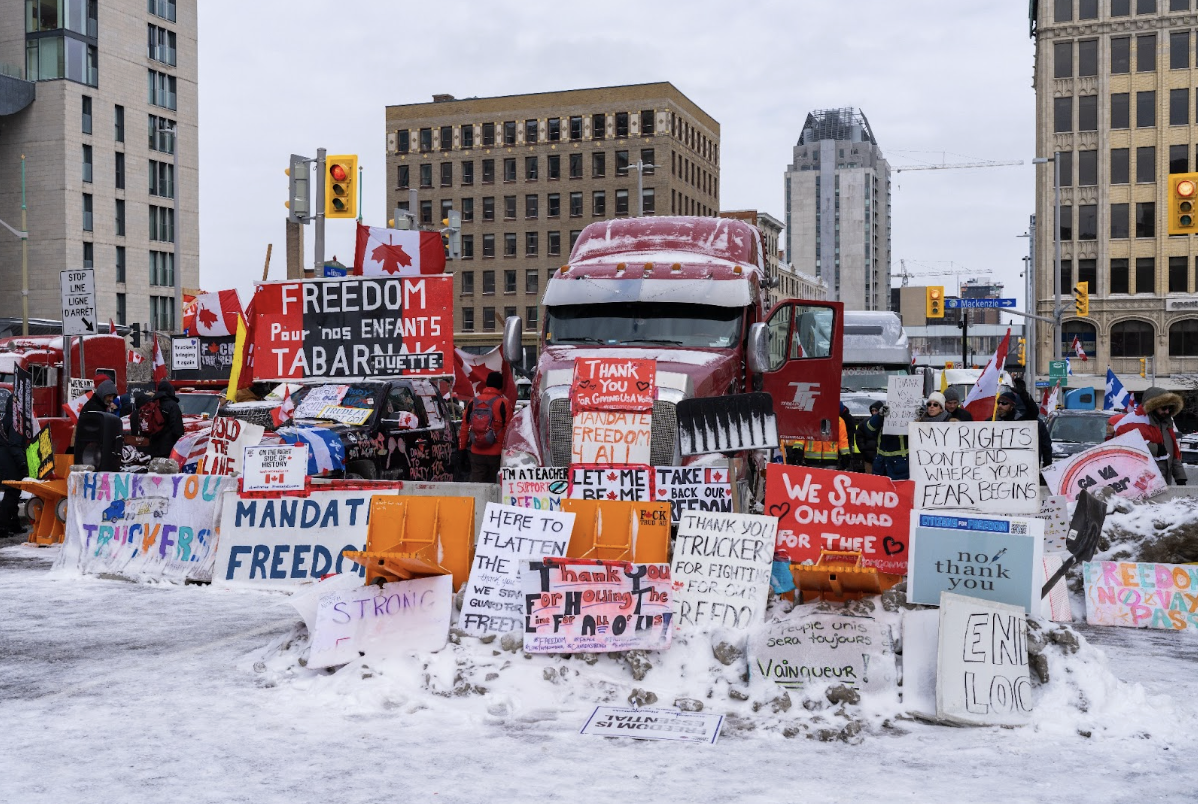
These two leaders have been outspoken about the instability of government leadership during and following the COVID-19 pandemic. Poilievre specifically backed the “Freedom Convoy”, the anti-mandate protesters who fought against government COVID-19 restrictions, framing it as a stand for personal liberty and resistance to the liberal government. Poilievre stated the protests were an “emergency that Justin Trudeau created, by attacking his own population, by driving up their cost of living, by making it impossible for people to pay their bills, and live their lives in peace”.
Present Day: Economic Conditions Creating Ripe Ground for Populist Coalescence
Contemporary economic pressures in Canada have created fertile grounds for populist rhetoric, particularly among younger and middle-class Canadians facing rising financial insecurity. The ongoing housing crisis has disproportionately affected younger generations, with homeownership becoming increasingly unattainable. Nearly ninety per cent of young Canadians view housing affordability as one of the country’s most urgent problems, stating that this issue should be at the top of the federal government’s agenda.
This widespread frustration has been manufactured into growing anti-elite sentiment, and politics have instrumentalized that to defend their views; Pierre Poilievre has compared the Canadian government to housing “gatekeepers,” limiting the housing supply. These tensions have been exacerbated by a forty-year high inflation experienced in 2022, which has further limited purchasing power. Poilievre has also leveraged this issue to fuel the anti-government sentiment referring to Trudeau’s fiscal policies as “Justinflation”, simplifying this economic problem to being at the fault of the Prime Minister.
Populist Rhetoric: Language of “Freedom”
Populist rhetoric in Canada has been centred around the language of “freedom” as a call for change against “elite control.” For instance, the “Freedom Convoy” of 2022 emerged not only as a protest against COVID-19 mandates but also as a means to challenge government legitimacy and the perceived overreach of power. Here, the populist strategy comes into play, as politicians grasped onto the image of “ordinary Canadians” whose freedoms were under siege.
Meanwhile, Pierre Poilievre has adopted slogans such as “axe the tax,” “bring it home,” and “take back control” to encapsulate an anti-establishment message; his campaign speaks to Canadians feeling blocked by these “gatekeepers,” bureaucrats, elites, and Ottawa insiders, for whom he claims the system is built. The emphasis in populist discourse is less on policy and more on emotional resonance, inviting constituents to feel empowered as though they are reclaiming their agency and collective dignity. This kind of rhetoric transforms economic and institutional grievances into a personal narrative of freedom versus control.
Permanence of Populism?
Populism in Canada appears to fluctuate in prevalence rather than maintain a constant intensity, typically spiking during periods of economic or political crisis. Historically, Canadian political culture has been relatively centrist and consensus-oriented, characterized by moderate policymaking and a preference for cooperative federalism over confrontational, populist-style politics. This tradition means that while populist episodes can surge, they often struggle to overturn the dominant norms of Canadian governance and decline once the immediate crisis subsides. The Case of the Great Depression era Social Credit Party in Alberta demonstrates this cycle of rise and decline. The party which promised to empower “ordinary citizens” through monetary reform, eventually was replaced by the Progressive Conservatives once economic conditions stabilized.
For Canadian politics, this turn means two things: populist movements will likely remain cyclically relevant, especially when people feel economically constricted or disconnected from elites. However, the foundational centrism1 of our system, provides a buffer that may prevent a full-scale populist realignment. In other words, populism in Canada can be politically disruptive but rarely transformative. Unlike in the United States, where populist waves have completely reshaped party identities – such as the Republican party, whose demographic base is shifting towards isolationist ideas and overall scepticism of globalization. For example, Republicans are more suspicious of the electoral process and more likely to view Democrats as a threat than it was when former President Trump launched his first run for the White House in 2015. In effect, populism in Canada may not be permanently dominant when drawing comparison to the United-States, but neither can it be dismissed as a passing phase; it has established itself as a recurring pattern that political actors and institutions must reckon with.
Edited by Catvy Tran
The opinions expressed in this article are solely those of the author and they do not reflect the position of the McGill Journal of Political Science or the Political Science Students’ Association.
Featured Image by Maksim Sokolov

- Centrism in Canadian politics refers to a long-standing commitment to moderation and pragmatism in governance. As David Coletto notes, Canada’s political culture naturally constrains how far public opinion or party platforms can drift from the centre. While specific policy preferences may shift, Canadians rarely abandon the underlying ethos of balance and incremental change that defines their political identity. For an overview see David Coletto “Is there even still a “centre” in Canadian politics?” ↩︎


