 0
0
 0
0
What do horse racing, the Olympics, elections, and war have in common? Polymarket, you can bet on all of them. As of February 16th, 2026, a volume of $268 million USD has been bet on when the U.S. may strike Iran. Betting on electoral politics is an even bigger market: a total of $668 million has been wagered on the potential Democratic nominee, with an additional $298 million bet on the Republican opponent.
Prediction markets allow users to bet on geopolitical events, including regime collapse, bombing targets, and elections. Prediction markets frame bets as event contracts or futures, skirting gambling regulations. While Kalshi, the other prominent prediction market, operates in USD and answers to the Commodity Futures Trading Commission (CFTC) rather than state gambling authorities, Polymarket operates offshore in cryptocurrency, out of regulatory reach.
By associating vast sums of money with geopolitical outcomes, these platforms present three risks: they incentivize the leak of sensitive information, unduly influence decision-making by creating financial incentives, and they gamify human suffering by making geopolitical conflict a profitable opportunity.
This January, an anonymous trader on Polymarket made over $400 000 USD betting on Venezuelan President Nicolas Maduro’s capture. According to PBS, a majority of the trader’s bets were placed only hours before Mr. Trump announced the raid on Mr. Maduro’s home. This timing led to swift accusations of insider trading, but as Polymarket allows anonymous betting using cryptocurrency, the trader remains unidentified.
In Israel, authorities have arrested an undisclosed number of people –including a military reservist– for using classified information to place wagers on Israeli strikes during its war with Iran last June. While this incident clearly highlights the risk of insider trading on classified information, it also illustrates a second danger: vested interests shaping military and political decision-making.
Financial Gains
Indeed, if individuals can financially gain from military action, such as an air strike, cyberattack, or confrontation, there is an inherent risk that personal interest may influence decision-making. Consider the mechanics of this problem.
A mid-level defence official with advanced knowledge of military action could place substantial bets on potential outcomes: whether the conflict will spiral, a regime will fall, or which states will engage. While they might not directly influence the decision, their financial stake creates a corrupting incentive – a structure allowing for subtle advocacy for more aggressive options, leaking information to manipulate market odds, or delaying peace talks.
The risk of active manipulation is also troubling. An individual betting against peace negotiations has an incentive to scuttle them. Someone wagering on regime collapse could leak intelligence to opposition groups or fuel instability through information operations. Unlike traditional corruption, which requires direct payment from an interested party, prediction markets allow self-dealing: you create your own payday by betting first, then act to ensure the outcome.
The massive payday extracted from Maduro’s capture makes this risk clear, even if the trader truly did not have advanced knowledge. When such windfalls become visible and normalized, they establish a template that others will follow. Whether or not such conflicts of interest already exist, there is clearly an architecture –prediction markets– which rewards them.
Betting Rules
Beyond these security vulnerabilities, the potential for personal financial gain creates a moral risk: the gamification of human suffering. There is currently a volume of over $3 billion USD bet on when Israel will next strike Gaza. According to the market, a strike on any area within the terrestrial territory of the Gaza Strip counts, including buffer zones. Official sources or reputable news outlets must corroborate the strike. In the comments of the market, users note the latest information on Palestinian injuries and deaths, often lamenting that these attacks were not counted in the market. One user commented, “On February 11, 2026: A Palestinian child wounded by Israeli gunfire attack,” and another responded, “Read the rules, bro” – a reference to the market stipulation that “a qualifying ‘strike’ is defined as the use of aerial bombs, drones, or missiles.”
When military strikes, regime collapses, and humanitarian crises become investment opportunities, a line is crossed from forecasting events to creating financial incentives around them. Even if the security risks posed by prediction markets are addressed, the gamification of human suffering they foster will continue. Regulatory architecture –namely that of the CFTC– has failed to keep pace with prediction markets. This is not only because Polymarket’s anonymous cryptobetting makes prosecution extremely difficult. In the U.S., earlier efforts to investigate Polymarket, including by the Department of Justice and the CFTC, were stopped by the Trump administration. This is a clear conflict of interest, as Polymarket is funded by Donald Trump Jr’s venture capital firm 1789 Capital, and Mr. Trump Jr. himself is a Polymarket adviser.
Is Regulation Possible?
As geopolitical prediction markets continue to grow, policymakers face a choice: regulate them harshly, allow them to proliferate unchecked, or seek a middle ground that preserves their purported forecasting value while mitigating their most risky effects. Effective regulation may mean subsuming prediction markets like Polymarket into existing regulatory systems, similar to those which regulate insider trading or gambling, as prediction markets carry the risks of both. Polymarket’s extralegal status, however, will make any form of regulation difficult. The third option may not even exist. Information aggregation on Polymarket cannot be separated from the profit motive, and you cannot create profit motives around human tragedy without fundamentally altering how everyday people who financially gain from betting on war think about violence.
Edited by Jude Archer
The argument defended in this article is solely that of the author and does not reflect the position of the McGill Journal of Political Science, the Political Science Students’ Association, or the McGill Department of Political Science.
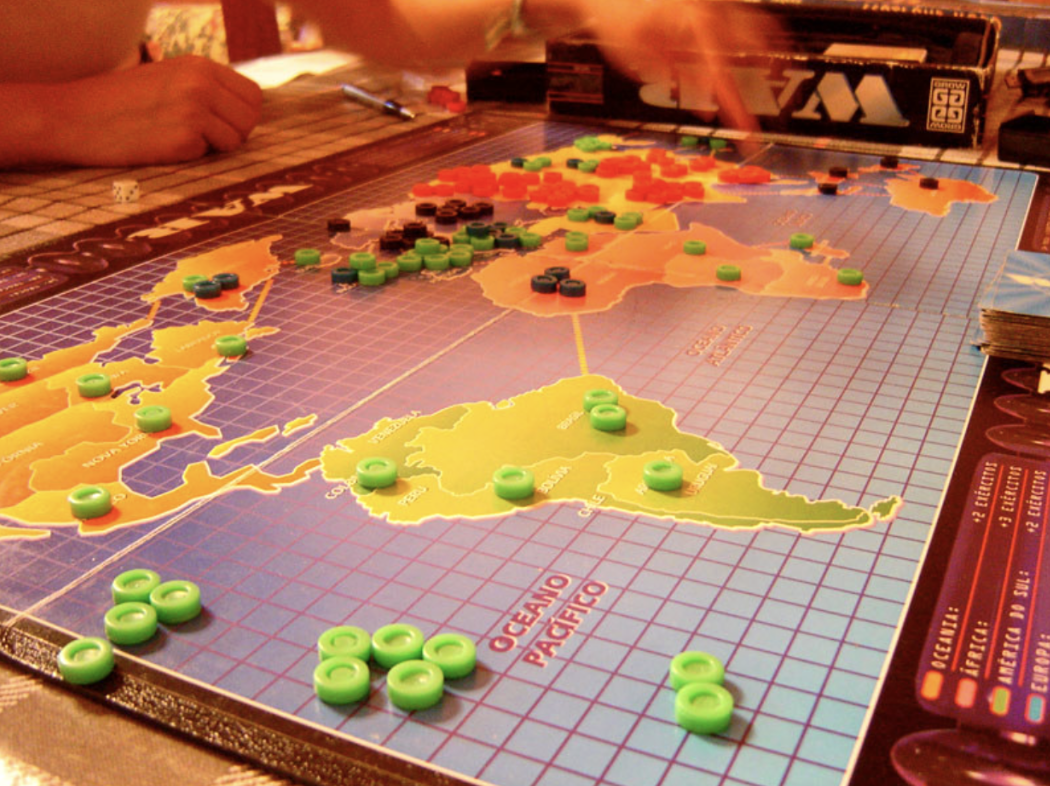
Featured image by Rômulo Castilho on Flickr


