 3
3
 0
0
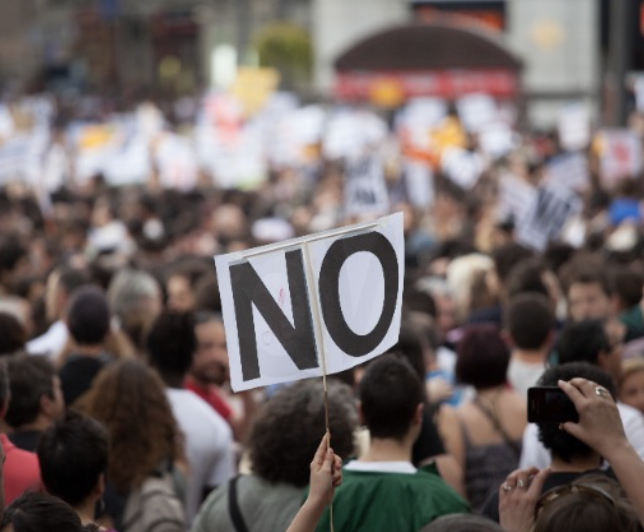
In Kathmandu, a social media ban ignited a nationwide revolt. In Antananarivo, blackouts and water shortages brought thousands to the streets. From Rabat to Lima, Gen Z-led demonstrations are multiplying across continents. Driven by frustration with corruption, economic hardship, and authoritarian governance, this new wave of youth mobilization is pressing governments for reform. Yet it is hardly unprecedented. From the 2011 Arab Spring to the global unrest of 2019, successive protest waves have erupted in politically fragile states – most of which ultimately reached a dead end.
These uprisings are grounded in democratic ideals, rooted in the pursuit of accountable governance centered on civil rights, but unfold within systems structurally unable or unwilling to deliver. They often trigger immediate political shocks – resignations, concessions, even regime collapse – yet rarely bring durable and lasting change. This recurring pattern reveals a gap between liberal aspirations and institutional realities, exposing both domestic fragility and the limited commitment of the international order.
Why Protests Emerge in Fragile States
In fragile political systems, weak accountability, hollowed institutions, and entrenched elites leave little room for grievances to be addressed through formal channels. Protest thus becomes a political necessity, expressed on digital networks. Yet, the same fragility that drives dissent also limits its impact. Even when regimes don’t respond with force, weak states still lack the bureaucratic and legal capacity to implement reform. What begins as short-term victories often turn into power vacuums, as those triumphs are swiftly reclaimed by military or elite actors.
The first major wave of this century, the Arab Spring, erupted in 2011 when mass demonstrations driven by youth swept across the Arab world in almost perfect synchrony. Sparked in Tunisia, they spread to Egypt, Libya, Yemen, Syria, and Bahrain. Despite distinct national contexts, protesters shared collective grievances: entrenched rulers, systemic corruption, inequality, and the absence of democratic representation. The simultaneity of these uprisings showed the extent of institutional stagnation and socio-economic discontent across the region.
Eight years later, the same tensions resurfaced. In 2019, often referred to as “the year of protest,” citizens from Algeria and Sudan to Lebanon, Iraq, Chile, and Colombia, once again filled the streets, with demands for accountability and reform. Many of these movements transcended the sectarian and ideological divides that structure their nation’s governance, revealing widespread frustration with governance failures and a deep distrust in their institutions.
In the last two years, Gen Z-led mobilizations have emerged globally, with particular intensity across Asia and Africa. While rooted in distinct national realities, they are increasingly transnational, drawing on the connective power of digital platforms and shared generational grievances. In Nepal, a controversial social media ban ignited broader protests over corruption and economic inertia. In Madagascar and Morocco, failing public services – from blackouts and water shortages to chronic underfunding of education and healthcare – triggered large-scale unrest.
The Cyclical Pattern of Protest
Despite political and historical differences, protest movements tend to follow a familiar pattern: mass mobilization, brief rupture, and the eventual return of entrenched power. In most cases, leaders fall, but systems remain. Movements may shake governments, but they rarely have the leverage to transform deeper power structures. As soon as protest momentum fades, informal networks of patronage, coercion, and economic dependency allow elites and the military to reclaim control and shut down openings for democratization. This cycle has already defined three major protest waves in the 21st century.
The 2011 Arab uprisings toppled Zine el-Abidine Ben Ali in Tunisia, Hosni Mubarak in Egypt, and Muammar Gaddafi in Libya, raising hopes for democratic transitions. But these hopes quickly unraveled as Libya, Syria, and Yemen descended into civil wars, and Bahrain’s uprising was crushed with Gulf support. In Egypt, the military that had enabled the transition ultimately overthrew the country’s first democratically elected president and restored authoritarian rule. Even in Tunisia, the perceived success story, recent years have seen significant democratic backsliding and political instability under Kais Saied, marked by his dissolution of parliament, suspension of the constitution, and persecution of the opposition.
The 2019 wave traced a similar trajectory. Mass mobilizations removed long-serving rulers Abdelaziz Bouteflika and Omar al-Bashir in Algeria and Sudan and forced prime ministerial resignations in Lebanon and Iraq. In Chile, the government reversed unpopular economic measures. Yet systemic reform remained elusive. In Sudan, a fragile joint military-civilian government collapsed in another military coup in 2021, followed by civil war. Algeria returned to authoritarian stability; Lebanon sank deeper into crisis and institutional paralysis; and Iraq’s patronage networks withstood reform pressures.
Early signs suggest the current wave of Gen Z uprisings may end the same way. Nepal is the third South Asian country to overthrow its government in four years, following Sri Lanka and Bangladesh. However, structural reform remains uncertain, and political parties already doubt the government’s commitment to the polls. In Madagascar, the president’s resignation paved the way for a military-led transition, echoing the authoritarian drift seen in Egypt and Sudan. Meanwhile, in Morocco, discontent continues to grow within a rigid political order where promises are not matched by concrete outcomes.
The Necessity of Global Engagement
These recurring domestic patterns unfold within an international system that defines the limits of political change. The liberal international order claims to uphold universal values but engages selectively based on strategic interest rather than principle. Uprisings that align with the geopolitical priorities of great powers receive attention, resources, or pressure, while those that do not are left to struggle alone within weak or authoritarian systems. Today’s Gen Z-led protests are treated as domestic disturbances rather than geopolitical concerns. In fact, external responses to uprisings in Nepal, Madagascar, Morocco, and beyond have been limited mostly to rhetorical support. This lack of engagement signals to regimes that repression or inaction carries little international cost, ultimately reinforcing the existing order.
Even when global powers do intervene, their involvement rarely results in meaningful or lasting change. In the case of Libya, NATO launched a military operation during the Arab Spring protests to overthrow Gaddafi’s regime. However, rather than paving the way for a democratic transition, “the intervention left a power vacuum” that ultimately led to a protracted civil war. In this context, overthrowing a regime without addressing underlying structural vulnerabilities merely replaces one deficient system with another. This dynamic reflects a global order more concerned with managing short-term instability than enabling structural reform. It also suggests that powerful states often benefit from preserving the status quo, which maintains their political and economic dominance, and therefore have little incentive to support the kind of systemic change required for effective democratic transitions.
The Decline of Democratic Legitimacy
The failure of international engagement is not only a matter of strategic calculation but of legitimacy, shifting the issue from willingness to capacity. Beyond the absence of geopolitical and economic incentives to act, the democratic models of global powers themselves are under strain. The liberal order now stands in a position of weakness, challenged both by the rise of alternative political regimes and by internal contradictions that erode its credibility. Three decades after democracy’s post-Cold War triumph, it is impossible to ignore the damage to its foundations and reputation. What once stood as the world’s dominant model of governance now faces a deep crisis of legitimacy, both as a domestic system and as an international ideal.
After the fall of the Berlin Wall, leaders of countries in transition sought to embrace democratic ideals to gain recognition and legitimacy within the international community. By contrast, the twenty-first century has witnessed the rise of authoritarian powers such as China and Russia, whose growing influence has redefined global incentives. Churchill once observed that “democracy is the worst type of government, except for all the others.” However, this new power balance undermines the long-standing consensus that democracy is the only viable path to prosperity and security, offering instead a model of economic success outside of liberal democracy.
At the same time, established democracies, from the U.S. to Brazil to India, have seen their own norms tested and fractured by illiberal currents and populist leaders. These internal contradictions have eroded the moral authority of democratic nations and, with it, their capacity to defend these values abroad. Therefore, democratic governments must restore the integrity of their own institutions in order to support the struggle for democracy around the world.
In essence, breaking the cycle requires more than mobilization. Although Gen Z movements have spread across continents, their growing activism has not resulted in the political leverage needed to drive structural change. Without durable strategies and the support of an international system that regains its authority, fragile states will remain trapped in cycles of revolt and repression.
Edited by Matteo de Campos Mello Grijns
The argument defended in this article is solely that of the author and does not reflect the position of the McGill Journal of Political Science, the Political Science Students’ Association, or the McGill Department of Political Science.
Featured image by ericcrama, obtained through iStock Photo


