 1
1
 0
0
On December 10, 2025, the Alberta government invoked Section 33 of the Canadian Charter of Rights and Freedoms, commonly known as the notwithstanding clause (NWC),1 to shield legislation targeting transgender youth and adults from judicial scrutiny. Through Bill 9, the Protecting Alberta’s Children Statutes Amendment Act, the United Conservative Party government under Ms. Danielle Smith applied the clause to amend three existing statutes, insulating them from the Charter of Rights and Freedoms.
The move marks one of the most consequential uses of the NWC in recent Canadian history; Bill 9 directly restricts the rights of the LGBTQ+ community in Alberta. While the NWC was originally justified as a mechanism to protect certain collective political interests over others, its newfound use to defend populist agendas—in line with the current precedent set by the preemptive use of the clause—has given a new face to the transgression of collective rights. Along with Alberta, Quebec has also used the NWC preemptively; with Quebec’s 2019 secularism bill (Bill 21) resulting in bans on religious symbols for public-sector workers, disproportionately impacting Muslim women, Jewish men, and the Sikh community. Like Alberta, Quebec invoked the clause to shield the legislation from constitutional challenges, allowing the province to enforce restrictions on religious expression and equality rights that would otherwise be vulnerable to judicial invalidation.
The NWC, once created as a tool for decentralization and provincial autonomy, is now being preemptively used in defence of a populist rhetoric, such as the one pushed by the Alberta government. While early invocations were often justified as protective of collective values, contemporary pre-emptive uses increasingly reflect explicitly coercive and rights-limiting objectives.
Origins of the Notwithstanding Clause
On November 5th, former Prime Minister Pierre Trudeau and the provincial Premiers of Canada agreed to a new constitutional accord at the First Ministers Conference of 1981. This conference, which led to the creation of the Charter of Rights and Freedoms, marked a significant shift in the Canadian legislature. The charter was signed by nine provincial governments, with Quebec abstaining. However, this constitutional change did not come without its obstacles. The night before the signing, federal Justice Minister Jean Chrétien and provincial Attorney Generals Roy Ramanow and Roy McMurtry negotiated a last-minute deal to win over the provinces opposed to the Charter, also known as the “Kitchen Accord.” The agreement introduced the NWC, which gives provincial governments the power to override certain Charter rights. Mr. Trudeau had initially rejected the idea, but ultimately accepted the addition to secure patriation2 and entrench the proposed rights and freedoms for all Canadians.
When announcements of the new charter broke the news, First Nations and Women’s organizations were furious over the failure to entrench Indigenous self-governance and gender-equality protections. Protests erupted, and eventually the federal and provincial governments responded by amending the constitution to protect Indigenous and gender-equality rights, including the addition of Section 28 and further clarification of Aboriginal rights under Section 35. Although this adjustment was a win for minority groups, the existence of the NWC meant these same rights could be threatened in the future – and politicians knew this. Opposition to the NWC has persisted in Parliament well after its adoption. In 1994, MP and former Trudeau cabinet minister Warren Allmand called for the removal of section 33, arguing that it undermined fundamental, universally recognized rights, such as freedom of religion, equality, and freedom from discrimination – rendering constitutional protections for minorities internally contradictory. As minister Allmand put it, it was like “giving with one hand and taking away with the other.”
The Scope and Limits of the Notwithstanding Clause
Section 33 of the Canadian Charter of Rights and Freedoms can only be used to override a limited set of provisions within the Charter. However, as stated, these sections are key protectors of fundamental human rights, especially the protection of vulnerable minorities within Canada. First, Section 2, the fundamental freedoms, which include Freedom of religion, expression, peaceful assembly, and association. The clause can also restrict sections 7 to 15. These sections include rights to life, liberty, and security; protections against unreasonable searches and seizures, arbitrary detention, arrest and trial; and equality rights. Other sections, such as democratic and minority-language rights, cannot be overridden by the clause.
An invocation of the NWC applies for five years and upon expiry can be renewed for the same period. The limit ensures that it is usually tied to one term of government. As law student Parul Kanwar writes in an article on the subject, the NWC is meant to be a “rare emergency tool, a safeguard that keeps ultimate power with elected governments, while still allowing courts to protect rights.” However, Kanwar asserts that Alberta’s United Conservative government is misusing it to prevent laws from being subject to judicial review. In this way, policies the courts have already found harmful are being preemptively protected by this supposed “nuclear option.”
However, the NWC’s use is often justified by governments as it is appealing to collective interests, rather than the minority. The clause was designed to allow elected legislatures to respond to judicial interpretations that they believe conflict with the collective good or general societal goals. An example of the clause being used for the purpose of collective good is Quebec’s justification of Bill 21, which was invoked to override freedom of religion and equality rights. The Quebec Government justified this as necessary to protect collective societal values such as secularism and state neutrality. However, under the collective good rationale, such use of NWC becomes problematic because it threatens to open an avenue for majoritarian tyranny, endangering minority rights.
Evolution of the Clause’s Usage
Over the first forty years of its existence, the NWC has been invoked in twenty-one provincial statutes, predominantly in Québec but also in Yukon, Saskatchewan, Alberta, and Ontario. Originating as a mechanism of political protest by the Québec government following the Charter’s adoption, the clause has since been applied in many contexts. Its past uses include protecting pension and education reforms, preserving French-language signage, regulating religious symbols in public service, and limiting third-party election spending.
Author Tsvi Kahana examined each case in which the NWC was invoked from 1982 to 2022. He categorized these invocations as temporary, ameliorative, or transitional in most cases, such as Québec’s education reforms, which moved from a religious to a language-based system. However, Kahana identified three instances of clause usage as “tyrannical.” Kahana identifies a tyrannical use as one that is either motivated by oppression or results in grave rights violations, particularly when the NWC enables that outcome. Québec’s French sign law of 1988, Québec’s religious symbols law of 2019, and, finally, Ontario’s election finance law of 2021 all exhibited these traits, according to Kahana.
This shift challenges the assumption that the clause was a ‘forbidden fruit’ outside Québec, as it is utilized across Canadian provinces today. Its use has generally respected the five-year rule, and most applications have not permanently overridden rights but facilitated transitions or addressed specific, time-limited policy aims. However, as its ‘tyrannical’ use becomes more common, this convention could change. Provinces will become more willing to turn to the NWC, especially as a preemptive measure. When normalized as a routine tool of governance rather than a last resort option, the clause may be readily used as a shield from constitutional challenge – whether by minority groups or the judiciary.
Alberta’s Bill 9 and the Pre-Emptive Override of Charter Rights
Protected under Section 33, Bill 9 is insulated from Charter challenges and introduces restrictions affecting transgender and gender-diverse youth. These include prohibitions on gender-affirming surgery for individuals under eighteen, bans on puberty blockers and hormone therapy for those under sixteen, and limits on transgender participation in female sports. The law also imposes parental consent requirements for students under sixteen seeking to change their names or pronouns. Additionally, It “requires parental opt-in consent to teaching on gender identity, sexual orientation or human sexuality”.
Government proponents frame these measures as in the interest of protecting children, ensuring parental involvement, and preserving fairness in sports. Yet, a coalition of critics, including human rights organizations, teachers’ unions, and LGBTQ+ advocates, condemns the use of the NWC as a “flagrant disregard for basic human rights”. As the Canadian Civil Liberties Association warned, the pre-emptive invocation of Section 33 “undermines the rule of law” by foreclosing judicial review before courts can assess the legislation’s constitutionality. The bill potentially transgresses Sections 15 (Equality rights) and 7 (Life, liberty, and security of the person) of the charter, as it restricts access to affirming educational and healthcare environments, exposing affected individuals to heightened risks of psychological harm and diminished personal autonomy.
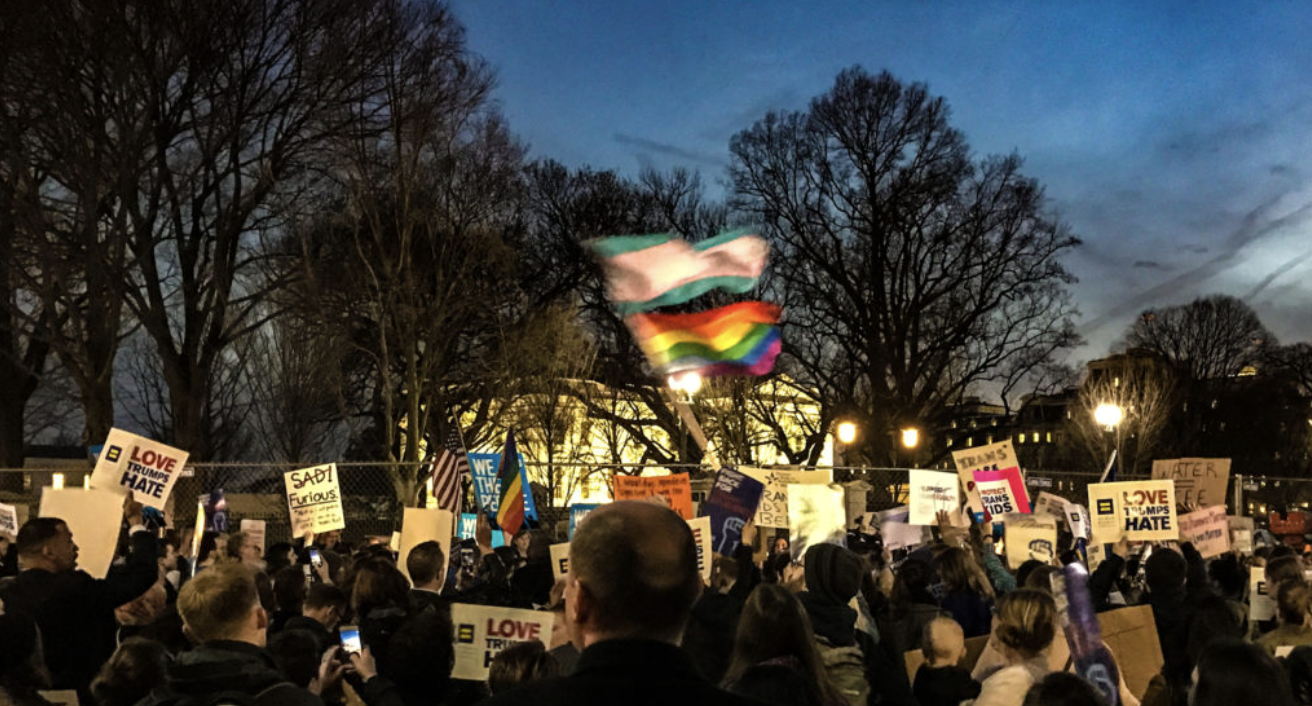
Legal and civil liberties actors argue that deploying the constitutional override so frequently and pre-emptively destabilizes the democratic balance between legislative and judicial authority. Organizations, including Amnesty International Canada, have denounced the law’s discriminatory effects, emphasizing the harms that can be created by restricting healthcare and forced disclosure of gender identity. Public backlash has been visible, with protests erupting in Calgary on Transgender Day of Remembrance. Organizer Victoria Bucholtz expressed concern for not only the right of the LGBTQ+ community, but for the general use of the notwithstanding clause – “To just ram through policies that really seem to violate human rights is a terrifying precedent that our government is establishing here in Alberta.”
Bill 9 represents Alberta’s second use of Section 33 in less than a month, following its earlier deployment in back-to-work legislation. Its continued use raises alarms about the clause’s accelerating normalization. This reflects profound concern that a mechanism, once utilized with the primary purpose of protecting collective interests, is now being weaponized by populist provincial governments to institutionalize discrimination.
Edited by Catvy Tran
The argument defended in this article is solely that of the author and does not reflect the position of the McGill Journal of Political Science, the Political Science Students’ Association, or the McGill Department of Political Science.
Featured Image by Ted Eytan
- The notwithstanding clause was created as a constitutional compromise during patriation between advocates of entrenched judicially enforceable rights and provincial governments committed to parliamentary sovereignty. Several provinces expressed concern that constitutional supremacy would shift political authority from legislatures to the judiciary, as judges are appointed rather than elected. The clause was therefore designed to preserve a residual form of democratic control, allowing these elected legislatures to temporarily override certain Charter protections when they determine that legislation serves a broader public interest. This rationale was not framed as a rejection of individual rights, but to protect legislative powers. ↩︎
- Patriation refers to the process by which Canada assumed full constitutional authority from the United Kingdom, in the enactment of the Constitution Act of 1982. This transferred the power to amend the Consitution to Canada and enabled the domestic entrenchement of the Canadian Charter of RIghts and Freedoms. ↩︎


