 0
0
 0
0
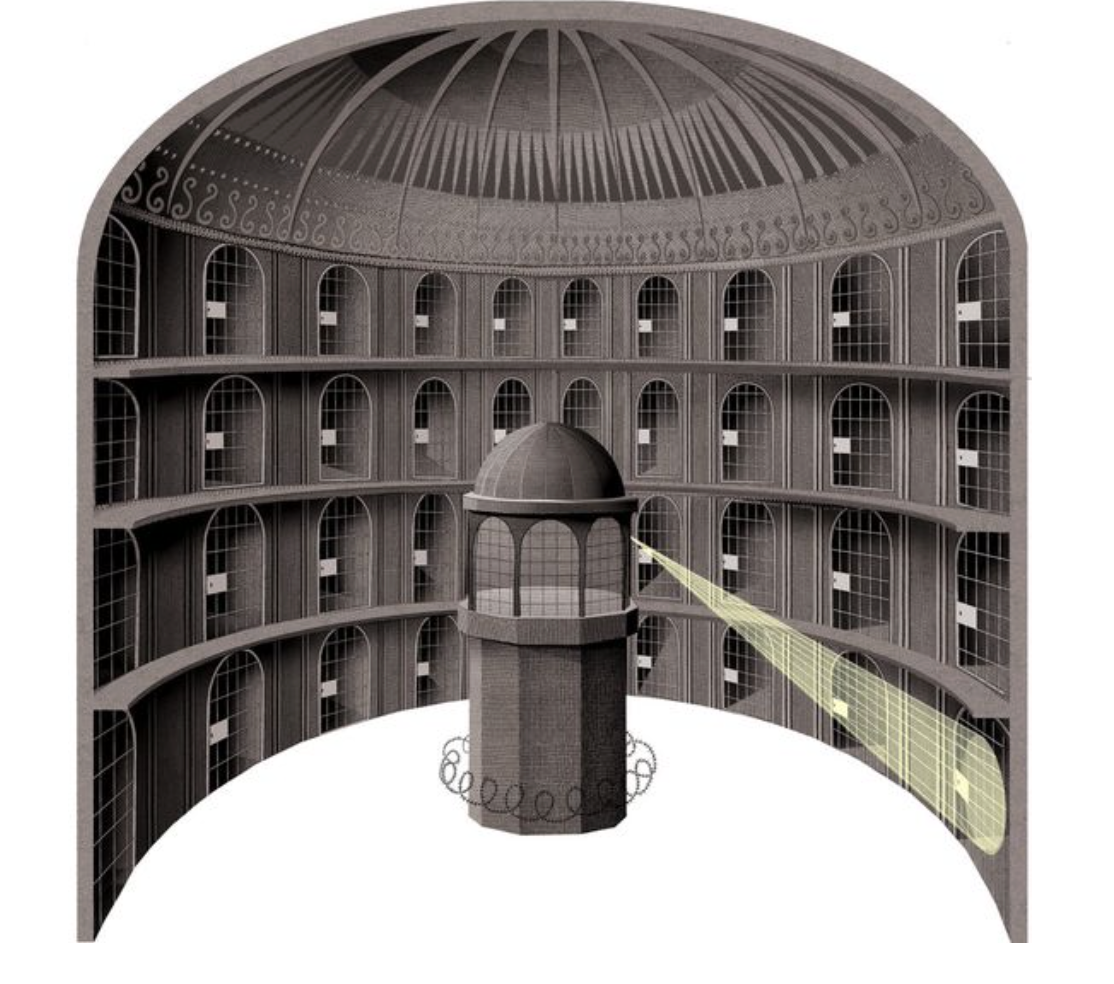
Edward Said frames the colonial practice of surveillance as one that reduced Arabs in the Middle East to observable, categorizable subjects. Perpetual accumulation of information on every facet of Arab life was managed by colonial powers in order to construct an “edifice” of knowledge, one that functioned like a “Benthamite Panopticon”.1 This rhetoric can be extended to contextualize the instrumentalization of the Palestinians in shaping a new military industrial complex through Israeli and Western-coroporate leadership. In the Palestinian case, the “edifice” of knowledge does not manifest in a traditional colonial administrative apparatus, but rather in a use of the military industrial complex to reduce them into an observable and controllable population, enforcing a modernized settler-colonial hierarchy. The imposition of surveillance without consent for the purpose of Israeli “security” parallels the manner in which colonial powers subverted Arab autonomy in the early 20th century.2
Terror Capitalism in the Age of Surveillance
Tech firms have been profiting from human data extraction since the turn of the 21st century. Their economic growth is predicated on the ability to capitalize on private information, transforming human data into a source of profit. This phenomenon, dubbed “surveillance capitalism” by Shoshana Zuboff, describes the practice, or logic of corporations gaining an “unprecedented form of power marked by extreme concentrations of knowledge and free from democratic oversight.”3 In the case of minority populations like the Palestinians and their relation to the increasingly privatized military industrial complex, surveillance capitalism becomes “terror capitalism,”4 a term coined by Darren Byler, which he uses to illustrate the surveillance and genocide of the Uyghur people. Terror capitalism encapsulates the specific phenomenon of private firms that work with security forces to build extensive data extraction systems on a subjugated minority. Further stripping them of civil rights, this is what Said would refer to as an “edifice” of colonial knowledge, and what Zuboff similarly would similarly view as part of an “architecture” that seeks to consolidate a systemic extraction of data – both of which are sustained by monopolized surveillance.
Behind the current monopoly of surveillance hides the United States. Edward Snowden’s historic leak of American intelligence revealed a National Security Agency (NSA) agreement which sought to pass along private communications between Palestinian Americans and their relatives in Israel/Palestine to the secretive Unit 8200 of the Israeli military. A leaked memorandum of the agreement specifies that, though the use of the data by Israel is subject to United States and Israeli law, the agreement is “legally unenforceable” –Israel only symbolically agreed to abide by the law, but does not have any contractual obligations to do so – nor would the state face consequences for breaking it. Unimpeded by “enforceable” legal restrictions, Unit 8200, responsible for “90% of intelligence material” in Israel, functions as a “coveted pipeline” to the privatized security technology industry in Israel, transforming government data into capital that fuels a war economy. Snowden notes that Palestinians’ lack of civil rights is exploited by the NSA and by Israeli companies and security forces to enforce the machinery of surveillance that survives on the mass collection of private data from Palestinians in Israel, Palestine, and the United States. The expansive network of American and Israeli corporations and security agencies rests upon the subjugation of Palestinians to grow its technological capabilities and partnerships. The network reinforces a colonial hierarchy where “the single, panoptic gaze of a military watchtower is replaced by assemblages of electronic monitoring devices powered by computers and code.”5
The Palestinian Laboratory
Israel’s permanent war economy hinges on an expressed commitment to fortressing Western interests by representing “civilization”.6 Existential danger is used to justify the constantly evolving military industrial complex and its unending quest for efficiency in a War on Terror against the Palestinians.7 Battle-tested surveillance and artificial intelligence technology symbiotically enhances the expansive Israeli military tech sector by showcasing their efficacy to a Western audience– all while new capital and expertise feed back into further military innovation.8 This cycle positions Palestine as a laboratory for experimental exhibitions of deadly technological prowess, at the cost of tens of thousands of innocent lives.
The sharpening of lethal technology at the expense of civilian life is characterized as an educational experience by leaders of the Israeli MIC. The Director-General of the IDF, Udi Adam, stated that the “defense ministry is in perpetual learning mode,” and the CEO of Xtend, a prominent Israeli military automated drone company, said her company “learned more in the first week following October 7th than we had in the previous four years.” War waged on Palestinians is transformed into research and development data, with firms like Xtend signing multi-million dollar contracts with the US military for their “combat-tested” products. Another example of this phenomenon was the implementation of the Elbit Systems’ Hermes 900 drone in Israel’s 2014 war on Gaza, which killed over 150 children. After the war, Elbit Systems’ market value neared its highest point, growing by 6.1%. In the following years after the 2014 war, the Israeli drone industry flourished, with Israeli produced drones accounting for approximately 60% of global drone exports by 2017.9 The boom in prosperity for the defense sector is demonstrated more recently by the genocide in Gaza. Israel broke its record in defense exports in 2024 with a value of $15 billion– a 13% increase from the previous year, before the genocide had begun. Israel’s Defense Minister Israel Katz directly stated that the “tremendous achievement” was a “direct result of the IDF and defense industries against Hamas in Gaza…and in additional arenas where we operate against Israel’s enemies.” Through Katz’s statement, we observe Israel’s awareness of its instrumental role in shaping the new surveillance based MIC using experimentation in Palestine.
Targeted Killing Software and its Humanitarian Consequences
The humanitarian costs of this experimentation are evidenced by the manner in which artificial intelligence and surveillance technology are used. Take Lavender, an AI software that uses mass surveillance to collect data on Palestinians, as a key example. The technology enables the IDF to assign each individual a ranking denoting the possibility that they are a militant. The system flagged tens of thousands of Palestinians as likely to be militants, with a 10% error margin. Those flagged would become targets of bombing, significantly simplifying the process of targeted killing for the IDF. Lavender’s kill lists were approved for implementation approximately two weeks after Hamas attacked Israel in October, 2023. Lavender accentuates the power of the colonial mass surveillance apparatus to implement and experiment with the MIC’s innovations.
Another automated system used by the IDF named “Where’s Daddy?” explicitly targets flagged Palestinians in their family homes, killing several innocents with each strike. An intelligence officer reported the system was built to look for targets in their family homes because it made killing them “easier”. The proliferation of automated warfare, specifically the implementation of targeted killing systems in Israel’s military operations, killed 1,340 families in only the first month of the October 7 war.
The Palestinian’s instrumentalized position as a subjugated minority in the era of mass surveillance has thus transformed their cities into laboratories for technological experimentation, their lives as data points for documentation, and their deaths as exhibitions of technological warfare’s efficiency. Under the all-encompassing gaze of a technological panopticon, the Palestinian case exemplifies the modernization of colonial surveillance practices in the Middle East, further proliferating the global military industrial complex.
Edited by Tristan Hernandez
The argument defended in this article is solely that of the author and does not reflect the position of the McGill Journal of Political Science, the Political Science Students’ Association, or the McGill Department of Political Science.
Featured image by Blue Ākāśha is licensed under CC BY-SA 4.0.
- Edward W. Said, Orientalism (New York: Pantheon Books, 1978), 131. ↩︎
- After the fall of the Ottoman Empire in 1922, France and Britain divided the Levant region into mandates. Nationalism and the desire for an autonomous state spread across the mandates in response to the global emergence of nation-states–threatening British and French rule–which sought to suppress such movements in order to maintain imperial control. ↩︎
- Shoshana Zuboff, The Age of Surveillance Capitalism: The Fight for a Human Future at the New Frontier of Power (New York: PublicAffairs, 2019). ↩︎
- Darren Byler, Terror Capitalism (Durham, NC: Duke University Press, 2021), https://doi.org/10.1215/9781478022268. ↩︎
- Goodfriend, “Algorithmic State Violence”. ↩︎
- Said, Orientalism. ↩︎
- Ali H. Musleh, “Designing in Real-Time: An Introduction to Weapons Design in the Settler-Colonial Present of Palestine,” Design and Culture 10, no. 1 (2018): 33–54, https://doi.org/10.1080/17547075.2018.1430992. ↩︎
- Musleh, “Designing in Real-Time,” 33. ↩︎
- Dana, “Death Dealers.” ↩︎


