 1
1
 0
0
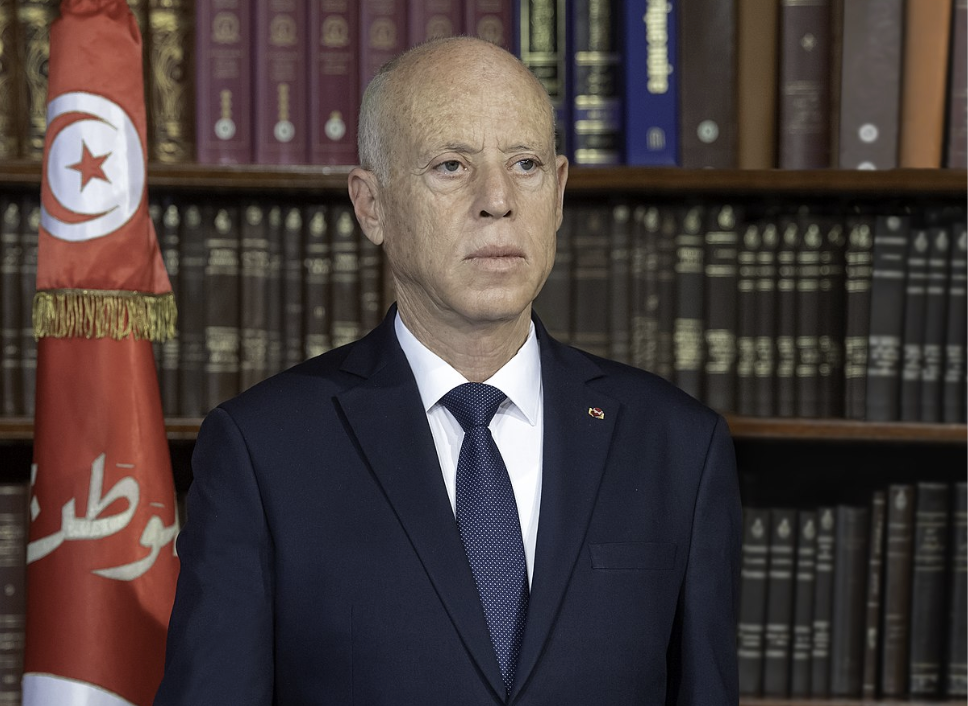
“We got nothing out of the revolution,” Houyem Boukchina, a 48-year-old Tunisian woman, told The New York Times in 2021. Her comments came following President Kais Saied’s autocratic turn in July of that year, when Saied dramatically increased his power through a “self-coup” which saw him take complete control over the country by firing the prime minister and freezing parliament.
The Tunisian Revolution which Ms. Boukchina speaks of saw longtime dictator Zine el-Abidine Ben Ali ousted and a democracy established in 2011. Her disaffiliation with this newfound democracy is a sentiment shared by many Tunisians, who “have grown to associate [democracy] with economic deterioration and dysfunction.”
The Tunisian case of public disaffiliation with democracy highlights the real possibility of democracies experiencing a turn due to poor economic practices. This phenomenon is not unique to Tunisia, as in the past other nations that had recently transitioned to democracy saw dissatisfaction with democratic systems as they experienced economic shortcomings. A strong example of this is the case of Russia in the 1990s, a case that can be understood and compared to Tunisia’s situation to understand why democracies retract and what can be done to protect them.
A Successful Revolution?
The Arab Spring, a 2011 string of protests that have defined politics in the Middle East and North Africa, began in Tunisia. Inspired by the self-immolation of street vendor Mohammed Bouazizi, the protests forced Ben Ali to flee the country. A new constitution was eventually created in 2014, which seemed to cement Tunisia’s standing as a democratic nation.
As nearby nations saw the groups that protested their dictatorial regimes quickly crushed, Tunisia looked to have transitioned successfully as its democracy held firm, evidenced by their parliamentary and presidential elections in 2014, which both saw turnout of over 60 per cent.
President Saied won the 2019 elections handily on a conservative platform, and quickly moved towards autocracy. His 2021 takeover was cemented by the adoption of a new constitution in 2022, which, according to Amnesty International, “threatens key institutional safeguards for human rights.” In 2025, Mr. Saied continued his authoritarian turn, sentencing dozens of his political opponents for crimes including “conspiracy against state security.” One of these opponents, rights activist Kamel Jendoubi, was quoted saying his conviction was “a political decree” orchestrated by “a paranoid autocrat.”
Backsliding: Economic and Democratic
Despite the authoritarian turn, opinion polling from Arab Barometer found that as of 2023, significantly more Tunisians trusted Saied (77%) more than they did parliament (22%). The sentiment that democracy is of no service to economic frustration, as argued by Mr. Boukchina, is shared amongst Tunisians – and was core to the beginning of the uprising which turned into a revolution against Ben Ali in 2011.
As noted by Carnegie Endowment for International Peace, Tunisia faces a debt crisis that has worsened significantly since the 2011 regime change. The country’s GDP only grew 0.4% in 2023, and foreign investment into Tunisia declined as the young democracy aged. Despite sharing comments supporting Tunisia’s transition to democracy, the West failed to provide meaningful economic commitments to the country. As noted by The Arab Weekly, The EU could have backed up the pro-democracy rhetoric from the West by “launching a Marshall Plan-type programme that would have fulfilled Tunisia’s ambition to link its fate, at least economically, to that of Europe.”
Given the worsening economic situation since 2011, it comes as no surprise that Mr. Saied’s authoritarian – and yet stable – image has garnered less backlash than may have been expected.
Comparing Saied and Putin: Different Nations, Same Cause
As previously noted, Tunisia seems to be on a similar path to the one taken by Russia in the late 1990s. Russia’s transition from the communist USSR in 1991 created significant economic challenges, as the country’s GDP declined yearly through the mid 1990s. This crisis worsened in 1998, when the country announced it could not pay its debts. These economic issues are eerily similar to those Tunisia faces today, and fostered a distaste for democracy. This led to mass protests, where many called for the return of the Communist Party to power, despite its decades of authoritarian rule in Russia.
Putin was appointed as prime minister in 1999 with support from Russia’s democratic parliament as an alternative to pro-communist factions, and would become president later that year when Boris Yeltsin unexpectedly resigned.
Putin’s rise cannot be separated from the 1998 crisis, and he gained legitimacy due to economic growth driven by rising global energy prices concurrent with his first term. Since 1999, Putin has been the de facto leader of Russia, briefly serving as prime minister when he reached his term limit in 2008 only to return in 2012, continually manipulating Russia’s political institutions to keep power. Indexes of democracy such as the Lexical Index of Electoral Democracy have characterized Russia as sliding from being an electoral democracy to a one-party autocracy during Putin’s tenure.
Tunisia’s Path Back to Democracy
To avoid suffering the same fate as Russia, Tunisia, and any outside actors hoping to support democracy need to understand the role of Western economic policies in creating Russia’s modern authoritarian leadership. Following the 1998 crisis, the West lent to large businesses like Gazprom rather than investing in smaller ones. Putin was then able to use Gazprom as a tool to support his autocratic rule, with The Moscow Times reporting in 2023 that Gazprom created a private army to fight in Putin’s war in Ukraine.
In order to prevent a similar situation from arising in Tunisia, foreign investments ought to benefit smaller businesses to avoid forming an oligarchy – which today supports and maintains Putin’s power. Foreign investment strategies into Tunisia are best when coming from the European Union. EU members already account for over 50 per cent of Tunisian trade, and, as noted by The Arab Weekly, the EU has strong incentives to engage in further economic partnership with Tunisia and normalize relations – to mitigate its migration concerns.
Thus, the rise of authoritarianism in Tunisia follows a pattern we have seen before. Its economic challenges closely resemble those of Russia in the late 1990s. This examination of the Russian case clarifies how democracy in Tunisia can be revitalized through investing and supporting small businesses.
Edited by Margaux Zani and Nuala O’Connell
The argument defended in this article is solely that of the author and does not reflect the position of the McGill Journal of Political Science, the Political Science Students’ Association, or the McGill Department of Political Science.
Featured image from Wikimedia Commons


