 1
1
 0
0
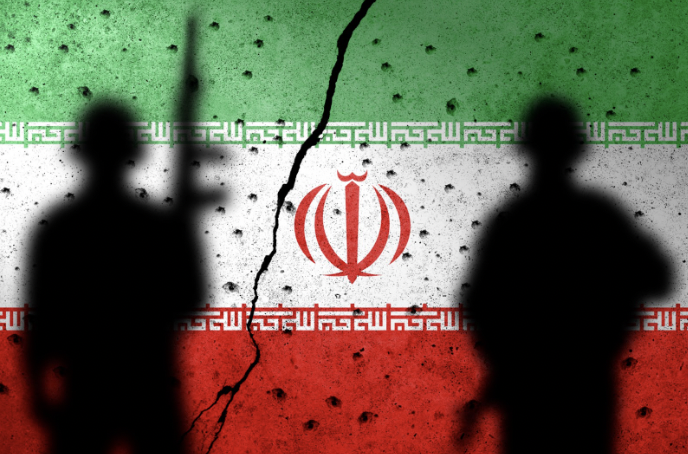
Economic collapse, recurring waves of protest, and diplomatic isolation – Iran is currently undergoing one of the most severe legitimacy crises since the establishment of the Islamic Republic. From Washington to Tel Aviv, this fragility appears strategically exploitable. A regime under internal strain may seem more susceptible to external pressure, and the option of military intervention is considered a way to weaken authoritarian rule and halt Iran’s nuclear trajectory.
Yet this logic misreads both the political incentives of threatened regimes and the regional structure of deterrence in the Middle East. It assumes that vulnerability equals opportunity. In practice, however, military intervention would likely achieve the opposite: consolidating authoritarian power through securitization and triggering a regionalized conflict that no single actor can control. Even if such pressure were to succeed in toppling the clerical leadership, historical precedent suggests that externally driven breakdown rarely produces stable democratic governance.
Because neither outcome advances long-term stability and both impose high strategic costs, intervention remains a strategic trap, threatening to lock Iran into a cycle of authoritarian retrenchment rather than structural transformation.
External Threat and Authoritarian Survival
In authoritarian systems, external pressure often strengthens regime stability by accelerating securitization. When domestic unrest coincides with foreign threats, survival becomes the overriding priority, effectively displacing reform as a viable, strategic option. Comparative research shows that foreign threats tend to increase autocratic durability by justifying repression and reinforcing elite cohesion around security institutions.
In Iran, the regime has a long history of utilizing external confrontation to deepen internal control. While the “rally-around-the-flag” effect may be weaker today than during the Iran-Iraq War – evidenced by protestors openly rejecting domestic dissent and foreign adventurism – the regime does not require broad popular consent to be effective. It only requires a pretext to mobilize its security apparatus. Military confrontation would legitimize claims that protest movements are instruments of foreign destabilization. This weakens opposition coalitions, facilitates mass arrests under the guise of national security, and consolidates elite cohesion around the security apparatus, particularly within the Islamic Revolutionary Guard Corps.
Through resistance narratives and emergency governance, regime authority is reconstructed around security rather than legitimacy. Under these conditions, external military pressure is more likely to stabilize the regime internally than to accelerate its collapse.
The “Octopus Doctrine” and the Trap of Escalation
Iran’s military strategy is structured around asymmetry. Lacking conventional parity with the United States or Israel, Tehran relies on escalation diffusion: ensuring that any attack becomes regionally costly and politically difficult to sustain. This deterrence framework depends on a network of allied militias and strategic partnerships capable of imposing costs across multiple fronts.
This challenges the “Octopus Doctrine” currently debated in Israeli strategic circles – the operational concept that striking the “head” (Tehran) is more effective than fighting the “tentacles” (the proxies). This doctrine fails to account for the fact that “the Middle East is an interconnected strategic ecosystem where escalation is less a choice than a process.” As a result, U.S. or Israeli strikes would be unlikely to produce a contained bilateral confrontation. Instead, retaliation would be indirect and fragmented. Hezbollah in Lebanon, Iranian-aligned groups in Syria and Iraq, and militant factions connected to Tehran in Gaza all provide channels through which escalation could unfold without centralized command. Even limited proxy engagement risks triggering retaliation cycles that neither side fully controls.
This diffusion of escalation is particularly constraining for Israel. Israeli officials have acknowledged that air defense capacities were significantly strained during last year’s direct exchanges with Iran, and that achieving regime destabilization would likely require sustained military engagement rather than limited strikes. Moreover, regional allies further constrain escalation. Gulf states need stability to preserve regional security and further economic interests. Their vulnerability to missile attacks and infrastructure sabotage makes them wary of any strategy that leads to Iranian retaliation against regional energy or logistical hubs.
The Illusion of Constructive Regime Collapse
Proponents of intervention often counter that even if war consolidates the regime in the short term, sustained military pressure could still lead to regime collapse. Yet collapse does not imply political improvement. Historical experience in Iraq, Libya, and Syria suggests that externally driven regime change rarely produces stable democratic orders. Instead, it dismantles coercive institutions without replacing them, generating prolonged factional conflict and state fragmentation.
Iran’s political landscape offers little reason to expect a different outcome. The weakness of organized opposition, the centrality of security institutions, and the absence of unified political alternatives increase the likelihood that regime collapse would produce power vacuums rather than democratic transition. In the absence of a cohesive alternative government, competing factions, militia warlordism, and regional interference would likely dominate the post-collapse environment.
Moreover, regime collapse would not resolve regional security dilemmas but intensify them. Fragmented authority would multiply escalation pathways, reduce negotiation capacity, and increase the risk of uncontrolled violence. Thus, even the most optimistic outcome of the intervention would be unlikely to yield a stable political equilibrium, leading instead to institutional breakdown.
Military Intervention: The path to instability
U.S. military intervention against Iran offers no viable pathway to constructive political change. It would either consolidate authoritarian power through repression and regionalized deterrence or precipitate regime collapse without institutional replacement. In Libya, U.S military action dismantled the regime without establishing a sustainable governing alternative, which “set the country on the path of an unresolved civil war.” In Syria, lasting external pressure entrenched the survival of Bashar al-Assad’s regime, thus internationalizing and deepening the conflict.
Both scenarios impose high strategic costs and threaten to destabilize the broader Middle East.
Precisely because these outcomes are so damaging, the option of military intervention is increasingly constrained, leaving Iran’s domestic crisis unresolved. By transforming the domestic legitimacy crisis into a regional security confrontation, war would only militarize political conflict and export instability beyond Iran’s borders. In the absence of credible reform incentives or sustainable coercive strategies, Iran’s crisis is unlikely to be resolved through force.
Edited by Matteo de Campos Mello Grijns
The argument defended in this article is solely that of the author and does not reflect the position of the McGill Journal of Political Science, the Political Science Students’ Association, or the McGill Department of Political Science.
Featured image by Tomas Ragina, obtained through iStock


