When American Protection is No Longer Enough.
For decades, the United States has vowed to protect its allies from nuclear threats, allowing countries such as South Korea to rely on American nuclear capabilities rather than build their own arsenals. Yet, this arrangement revolves around a fundamental uncertainty. What happens when countries are no longer certain that the United States will defend them? This worsening concern is particularly relevant to South Korea, which faces a nuclear-armed North Korea while depending on American security guarantees for its defence. If confidence in these guarantees weakens, developing its own nuclear arsenal may become a way to ensure its security independently. However, this progression could undermine the very system of nuclear non-proliferation that American security bargains have helped sustain. The danger, therefore, extends beyond the possibility that weaker American security guarantees could encourage proliferation; even credible guarantees may not be enough to convince states that domestically-developed nuclear weapons are unnecessary.
With the current US administration adopting an increasingly unpredictable approach to its international commitments, American allies are being forced to reconsider how much of their national security should depend on the United States. In South Korea, President Trump’s continued demands for greater financial contributions toward American military presence, despite an existing cost-sharing agreement, have renewed questions about the future of the alliance. Such doubts over the country’s reliability are not new. France, for example, developed its own nuclear deterrent in 1960, partly because it questioned whether American protection would always be sufficient. Today, similar concerns are resurfacing in Japan, where lawmakers have begun to reconsider the country’s longstanding non-nuclear stance amid uncertainty over US security commitments. Yet, as South Korea demonstrates, the question is no longer simply whether American protection is reliable but whether relying on it can be considered a sufficient security guarantee.
The Limits of Nuclear Deterrence
The logic of extended deterrence rests on the promise to deter an attack from another state, rather than simply protecting one’s own borders. The effectiveness of this strategy, however, relies heavily on credibility. Would Washington D.C. risk a nuclear confrontation to defend Paris or Tokyo? A 2026 study published in the Journal of Peace Research found no evidence suggesting that greater nuclear superiority by a patron necessarily enhances its extended deterrence against nuclear-armed opponents. This enforces an important distinction: possessing nuclear weapons does not automatically make a promise to defend another country reliable.
South Korea: When Reassurance Fuels Insecurity
Bordering North Korea, a nuclear-armed adversary, South Korea has become increasingly relevant to this discussion. South Korea has both the technological capabilities and security incentives to consider developing its own nuclear arsenal. Nevertheless, it has remained under the American nuclear umbrella for the past several decades. The issue extends beyond the threat of North Korea to the credibility of American protection as an alternative to nuclear armament.
Public opinion suggests that these two factors are not inherently connected. According to the Asan Institute’s 2026 survey, although 80% of South Koreans support the acquisition of ‘an indigenous nuclear weapons capability’, this does not necessarily reflect a loss of faith in the US alliance. In fact, 59.1% of respondents believe the US would deploy nuclear weapons in response to a North Korean attack, and 49.5% maintain this belief even if it compromises American security. These figures challenge the assumption that nuclear ambitions emerge mainly when the security bargain losses credibility. A similar observation is put forward by Jiyound Ko, who found that reinforcing different aspects of US extended deterrence did not, on its own, lower South Korean public support for developing nuclear weapons. Lauren Sukin’s research goes further, suggesting that credible American security commitments may sometimes increase support for proliferation, as they can generate fears of being drawn into unnecessary conflict of nuclear escalation. Together, these findings reveal that Stronger American guarantees do not always reassure allies; they can also deepen the very insecurity that drives proliferation.
This dilemma is further explored in a 2026 study by Inseok Yoo which shows that US extended deterrence both protects and restrains allies. If an ally feels less protected but still constrained, it may push for greater strategic autonomy, potentially increasing the risk of proliferation. South Korea thus illustrates how nuclear proliferation cannot be explained by declining trust alone. While the United States has taken steps to reassure Seoul, including through the Nuclear Consultative Group and the Washington Declaration, these efforts do not appear to have eliminated the appeal of strategic autonomy.
Japan and the Politics of Non-Proliferation
Japan provides a useful contrast. Like South Korea, Japan has remained committed to a non-nuclear policy despite threats posed by nuclear-armed China, North Korea and Russia. According to Fitan Hoey’s research, US extended deterrence has been a key enabler of this policy, demonstrating that American guarantees can support non-proliferation where it is politically desirable. Nonetheless, Japan’s longstanding non-nuclear principles and domestic opposition to nuclear weapons have also reinforced its reliance on the US. While public support for nuclear weapons remains high in South Korea, Japan’s domestic opposition has helped sustain its non-nuclear stance.
Beyond the Promise of Protection
Taken together, these cases demonstrate that the relationship between American security guarantees and nuclear proliferation is far from straightforward. While South Korea shows that confidence in American protection does not eliminate nuclear ambitions, Japan demonstrates the importance of domestic preferences in sustaining non-nuclear policies. As allies increasingly question the reliability of US foreign policy, preventing proliferation will require more than promises of protection.
Ultimately, the future of nuclear non-proliferation depends not only on maintaining credible security guarantees, but also on preserving the political relationships that make acquiring nuclear weapons unnecessary. Even allies who trust American protection may no longer believe that relying on the hegemon is a sufficient national security strategy.
Edited by Martín Rojas Remolina
The argument defended in this article is solely that of the author and does not reflect the position of the McGill Journal of Political Science, the Political Science Students’ Association, or the Political Science Department.
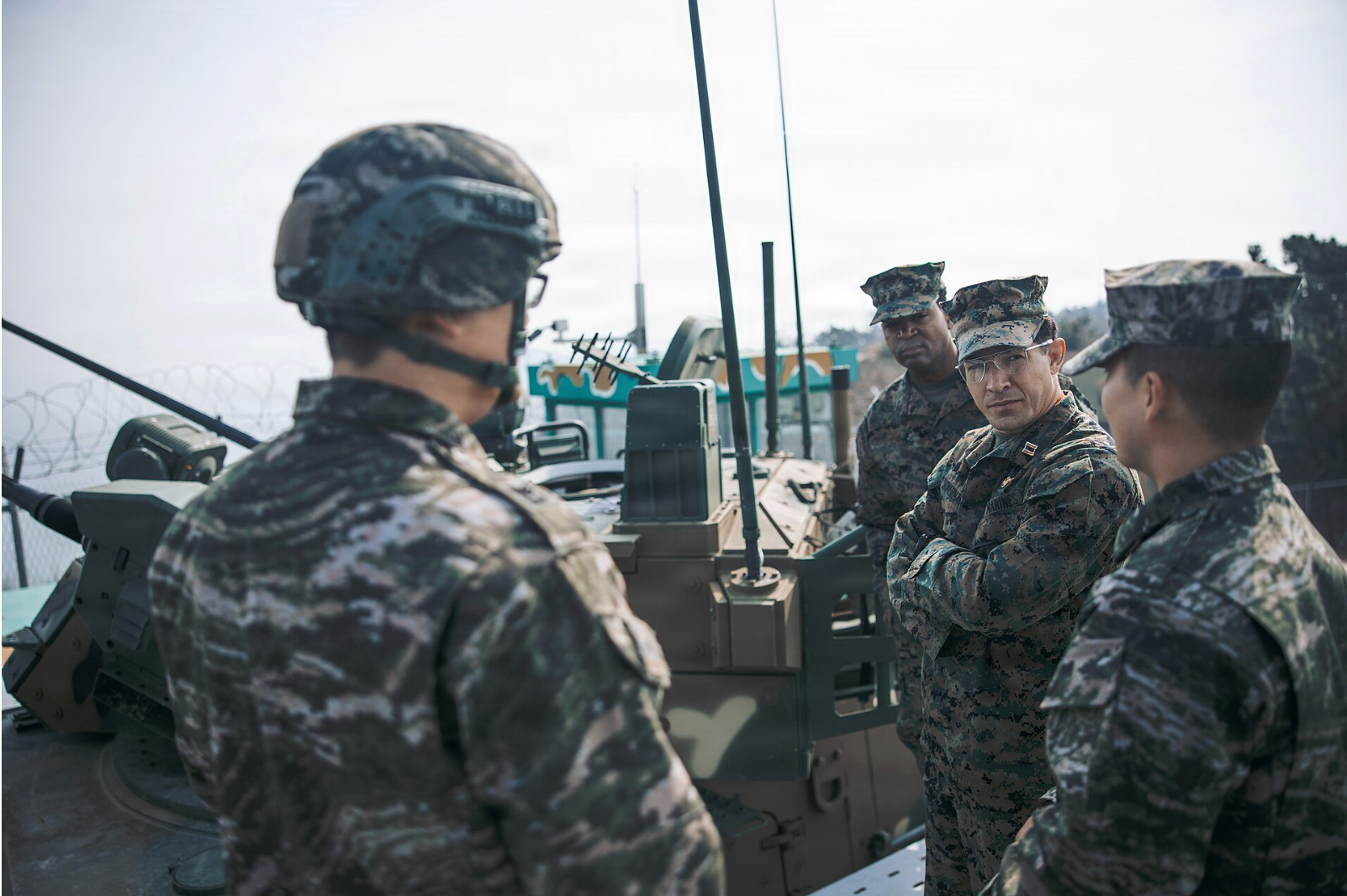
Featured image by Cpl. Meshaq Hylton.
