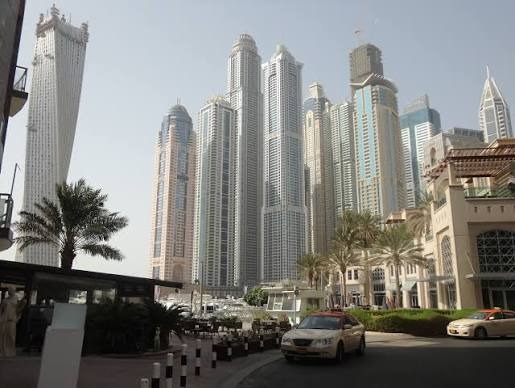
In late 2022, as protests swept across Iranian cities, the regime in Tehran activated an 88-day nationwide internet blackout, severing 90 million citizens from global networks. Inside the country, citizens described the sudden digital isolation as a form of “solitary confinement” – being cut off from the outside world. Meanwhile, just across the Persian Gulf, the United Arab Emirates was projecting an entirely opposite image to the world as a hyper-connected tech hub with glittering skyscrapers and international summits. Yet beneath these contrasting images, there is a striking alignment in political strategy. While traditional political science measures authoritarian repression through physical acts such as police violence and arrests, modern autocracies have recognized that control over the digital sphere is just as critical for a regime’s survival. Repression in the twenty-first century is no longer defined solely by what a state does to the physical body, but equally by surveillance and control of information. By comparing Iran’s strategy of digital disconnection with the UAE model, a clear pattern can be recognized: despite their vastly different political systems and global reputations, both regimes have created digital tools to neutralize political dissent, maintain a good public face, and secure authoritarian control.
Iran’s Coercive Disconnection:
To understand Iran’s approach to digital control, one must look past the conception of internet blackouts as sudden and chaotic reactions to a spontaneous crisis; in reality, Iran’s digital isolation has been engineered over two decades. Following the 2009 Green Movement protests, in which social media played a large role in organizing demonstrations, the Iranian government set out to build a dual network infrastructure known as the National Information Network (NIN), serving as a domestic intranet. During times of peace, it operates alongside the global internet, hosting banking and government services. But during moments of political crisis, the state can activate a digital “kill switch,” severing ordinary citizens from the global web while keeping domestic infrastructure online. During the record 88-day blackout, global traffic had gone to near zero while state institutions remained operational. The Iranian government had instituted a system of “whitelisted” internet access, granting special ‘white’ SIM cards to approved elites and government officials. For the IRGC, the staged blackout serves a politically charged purpose. Plunging a population into digital darkness prevents demonstrators from organizing, stops real-time documentation of human rights abuses and hides state violence from the international community. Combined with state-backed ‘cyber armies’ that flood social media with pro-regime disinformation, the state can alter the public record, making it nearly impossible for a collective understanding of resistance to emerge.
The UAE Controlled Surveillance:
If Iran represents an authoritarian model of coercive disconnection, the UAE exemplifies a model of co-opted connectivity. The Emirati government does not shut down the internet; instead, it invites its residents and global investors into a digital ecosystem built around continuous visibility. In major urban centers like Dubai and Abu Dhabi, AI surveillance networks are embedded in the public space. Dubai’s Oyoon program has created 300,000 facial recognition cameras to monitor residents in real time, while Abu Dhabi’s Falcon Eye system enables urban tracking. Extended beyond public space, the state has invested heavily in spyware like Israel’s Pegasus to compromise the personal devices of political critics and human rights activists. Prominent Emirati activist Ahmed Mansoor, for instance, was sentenced to 10 years in prison after information extracted from his Pegasus-infected phone was used against him. The UAE mandates heavy fines or even life imprisonment for certain online posts, including content that contradicts official statements. Unlike Iran, the UAE does not need to shut down the internet to control online speech. Instead, surveillance and the threat of punishment make people afraid to express their political opinions. Knowing that their online activity can be monitored coerces citizens into self-silencing to avoid the consequences of public dissent.
The Iranian and Emirati regimes respectively defend internet shutoffs. Iranian officials justify internet shutoffs as necessary security measures to shield domestic infrastructure from foreign cyberattacks. Emirati authorities say that cybercrime legislation and mass surveillance are tools to help protect public order and combat “false news.” Yet in both cases official narratives are vastly different from public imagination and domestic reality. The UAE presents itself globally as a liberal, progressive destination for business and tourism, yet subjects its population to unprecedented levels of digital monitoring. Iran claims to protect its national sovereignty, yet its digital blackouts destroy families and paralyze its own population.
Conclusion
This analysis matters far beyond the borders of the Middle East, as the technologies used in Tehran and Dubai are only a small reflection of the global shift toward digital authoritarianism. When governments normalize shutting off access or deploying mass surveillance to preserve political stability, they do not merely restrict online activity—they strip citizens of their fundamental human rights to express political opinion. In an increasingly digital world, access to the internet is a necessity, and as authorities create digital borders and political control, it silences human freedom. While Iran and the UAE show how technology can be used to silence dissent, it’s important to note that the internet also gives much more freedom to hold the government accountable and share experiences. What remains is to ensure that technology continues to give people a voice rather than take it away.
Edited by Laila Graham
The argument defended in this article is solely that of the author and does not reflect the position of the McGill Journal of Political Science, the Political Science Students’ Association, or the McGill Department of Political Science.
Featured Image by: Shwetasarvesh on Wikimedia Commons
