Artificial intelligence (AI) has been introduced as a universally applicable tool, and public hesitancy has often been framed around its environmental impact. On a legislative level, the proliferation of AI has created unprecedented challenges for governments seeking to protect citizens, specifically children, from sexual exploitation. This is because AI-generated Child Sexual Abuse Material (CSAM) muddles existing legal frameworks. Many frameworks do not address AI nor the provocative imagery it can create that, when compounded with the perception that real children are not exploited in the process of its production, presents a major complication for existing legal frameworks. A recent August 2026 court ruling in the United States highlights the constitutional difficulties of restricting certain forms of synthetic sexual imagery under the First Amendment.
Australia, a liberal democracy comparable to the U.S. in its strong protections for freedom of expression, has taken a different approach for regulating AI-generated CSAM. These disparities raise a broad question: how should democratic governments balance constitutional freedoms with the civic and legal duty to protect children from various forms of sexual exploitation? Examining the two countries allows for an analysis of the gaps in the U.S. approach and illuminates what the U.S. government can learn from Australia’s regulatory framework.
U.S. Constitutional Limits on Criminalization
The U.S. approach to AI-generated CSAM is informed by the constitutional protections of freedom of expression outlined in the First Amendment. Although the Supreme Court ruled in favor of prohibiting material produced through the [physical] sexual exploitation of children in New York v. Ferber (1982), it made an important distinction in the later case of Ashcroft v. Free Speech Coalition (2002): virtual images of CSAM are not equivalent to ‘real’ CSAM as they do not physically involve or harm an actual child in their generation. The implication of this Supreme Court ruling is that banning certain materials that lack a direct, tangible link to existing victims can be considered as suppressing protected adult speech and abstract ideas.
It should be considered to what extent AI-generated CSAM is an abstraction, as AI generators create content from real, pre-existing images that depict actual people, including children. It uses and merges real images to create synthetic ones, which only further complicates the perception that AI image generation does not draw on photographs of real people. Ashcroft c. Free Speech Coalition was a direct response to the previous Child Pornography Prevention Act of 1996 (CPPA), which expanded federal protections to include “any visual depiction” that appears to be a minor engaging in sexually explicit conduct; an act that would have likely applied to modern AI-CSAM generation and prohibited such violations.
The distinction established in Ashcroft has become increasingly difficult to apply as further developments in generative AI enable the production of hyperrealistic depictions of CSAM without the physical involvement of actual children. This challenge is the foundation of United States v. Anderegg (2026), in which the Seventh Circuit affirmed the dismissal of a federal possession charge involving AI-generated CSAM, finding that existing statutes were unconstitutional in application to the material discovered. Consequently, this approach raises the issue of whether existing legal frameworks can adequately address the risks of increasingly realistic synthetic imagery without venturing into unconstitutional territory.
Australia’s Existing Criminal Legislation
Australia distinguishes itself from the U.S. because its existing criminal law has been used to prosecute cases regarding AI-generated CSAM. Section 474.17A of the Criminal Code Act 1995 (amended in 2024) explicitly criminalizes images, videos, or audio that have been “edited or entirely created using digital technology (including artificial intelligence), generating a realistic but false depiction of the person.” This verbiage contains explicit protections for children against AI-generated CSAM.
In March 2024, an offender was sentenced to eight years and six months after using AI-generation websites to produce thousands of CSAM images. This demonstrates the government’s focus on protecting children from sexual exploitation as they both interpreted existing laws and amended said laws to prosecute in cases regarding synthetic CSAM. Further legal restrictions have been proposed by members of Australian government, such as the Criminal Code Amendment (Using Technology to Generate Child Abuse Material) Bill 2025, which aims to create new offenses for generating CSAM using a telecommunication service, which did not proceed into law. Australia’s approach differs from the U.S. position because the government is actively reforming and proposing further changes to existing criminalization statutes and providing ways for prosecuting some AI-generated material with existing amendments.
Can Australia’s Methodology be Replicated?
The varying approaches of the U.S. and Australia in regulating AI-generated CSAM reflects the differences in how governments define prohibited material, interpret constitutional protections, and entrench concerns about child exploitation into applicable criminal law. In the U.S., the constitutional precedent of the First Amendment limits the government’s ability to prohibit certain synthetic depictions solely on the basis of their content, due to the lack of a physical child being involved.
Australia is a crucial example of how existing criminal offences can be applied to some AI-generated material while lawmakers further consider more explicit restrictions on its generation. This approach offers potential lessons for the U.S.. Primarily, explicitly addressing AI-generated CSAM in legislation could provide the legal clarity needed by prosecutors and courts to better address the problem and reduce the reliance on interpreting legislation created before the dissemination of AI.
Lawmakers would need to define the prohibited material and conduct covered by these offences and establish safeguards to prevent unconstitutional overreach. For the U.S., this may mean developing regulations that account for constitutional limits in cases such as United States. v. Anderegg. The Australian precedent demonstrates the significance of categorizing AI-generated CSAM as a distinct legislative problem as opposed to assuming that existing frameworks will sufficiently cover all synthetic material.
Conclusion
The complications arising from regulating AI-generated CSAM are a result of balancing constitutional freedoms with the protection of children from sexual exploitation. The experiences covered within the U.S. and Australia show that existing legal frameworks do not necessarily address the risks posed by generative AI. Australia’s pathway offers potential lessons in legislative clarity and targeted regulation alongside meaningful reform to account for a country’s constitutional constraints. Governments must ensure that their legal protections evolve alongside AI’s continued advancement.
Edited by Laila Graham
The argument defended in this article is solely that of the author and does not reflect the position of the McGill Journal of Political Science, the Political Science Students’ Association, or the McGill Department of Political Science.
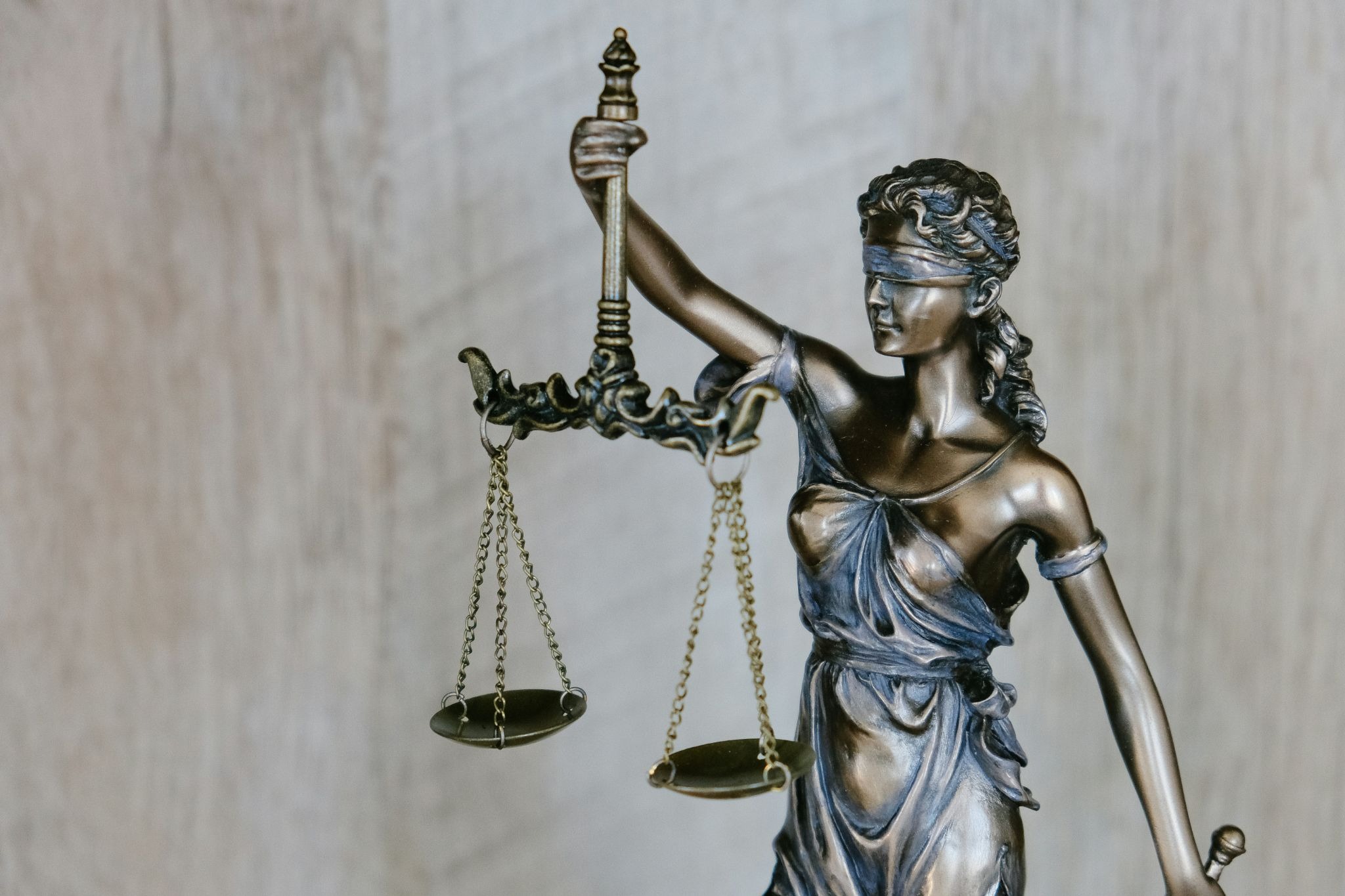
Featured image by Tingey Injury Law Firm on Unsplash