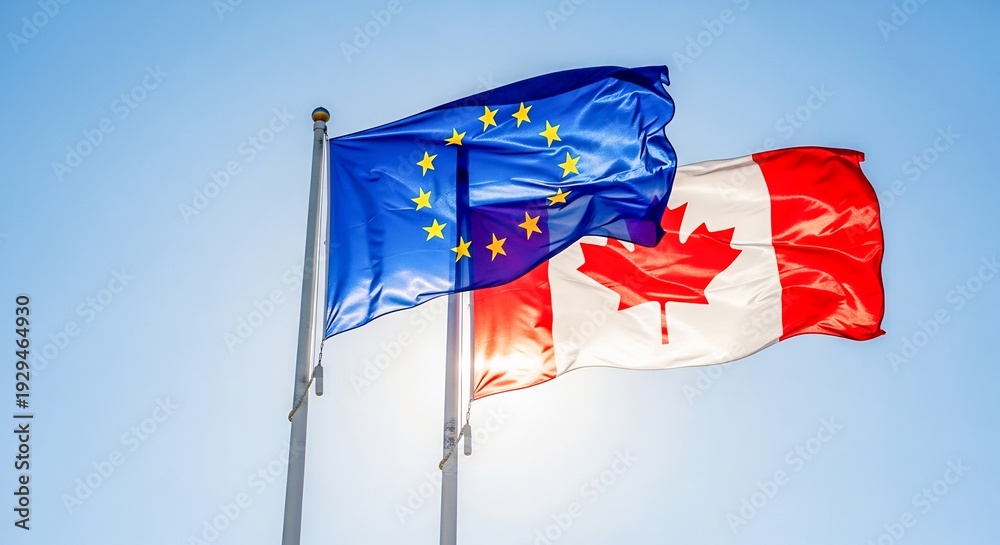
In December 2025, Canada quietly crossed a line few anticipated. It became the first non-European state to integrate the European Union’s one hundred and fifty billion euros Security Action for Europe (SAFE) initiative. Designed to consolidate European defence production under common procurement rules, SAFE seeks to strengthen Europe’s industrial sovereignty through coordinated procurement and shared eligibility standards. Canada’s inclusion situates a North American state within the core of the European Union’s (EU) defence market at a crucial moment. As trust among transatlantic allies erodes amid current tensions with the United States, Canada’s inclusion in SAFE highlights the potential for a recalibration of the alliance.
Three months after joining the partnership, Ottawa released its first Defence Industrial Strategy, where the state openly acknowledged its overtly expansive reliance on its historically stable alliance with the US. Together, these developments are not routine modernization efforts; rather, they mark a reorientation of Canada’s defence economy toward European production networks and regulatory frameworks. In seeking greater “sovereignty,” Ottawa may not be escaping dependence so much as recalibrating it. Canada appears to be redistributing its external reliance towards a European-centered industrial sphere in an attempt to mitigate its structural dependency on the US.
Reversing Reliance
Canada’s defence posture has long rested on an uncomfortable imbalance, with roughly seventy to seventy-five per cent of its capital spending on weapons and equipment flowing towards US suppliers. Prime Minister Mark Carney has argued (repeatedly so) over the past year that the status quo, in which “seventy-five cents of every dollar of capital spending for defence goes to the United States,” is not sustainable, warning that Canada can no longer afford to outsource its national security. While Canada and the United States remain deeply integrated allies, heightened geopolitical pressures1 in the relationship have revealed substantial limits to relying so extensively on a single defence partner.
To address that vulnerability, Ottawa recently launched Canada’s first Defence Industrial Strategy, a policy aimed at rebuilding domestic capacity and reducing reliance on foreign suppliers. This shift in policy indicates the government’s aim to direct seventy per cent of federal defence contracts to Canadian firms within the next decade, therefore reshaping where, and how, military capability is produced. In Mr. Carney’s framing, defence is no longer measured only by force size or new equipment purchases. It is tied to whether the country can independently produce and maintain the systems it relies on, and whether it can do so without becoming vulnerable to decisions made outside its control. Yet, reduced exposure does not necessarily eliminate structural constraint.2 Efforts to regain control over the production operate within a broader framework of alliance commitments and access requirements. Autonomy, in this sense, is pursued through a repositioning within independent systems rather than a withdrawal from them.
Governance By Externalization
Canada’s participation in the European Union’s SAFE initiative, therefore, reflects more than procurement diversification. It represents alignment within a structured production framework. SAFE conditions participation in its coordinated procurement system on compliance with eligibility rules, including a requirement that shared components sourced from outside the EU, EEA-EFTA states3, Ukraine, or Canada to be no more than “thirty-five per cent of the total estimated cost of the final product.” Participation thus necessitates adjustments to the supply chain and compliance with European production standards.
This dynamic provides a clear application of Frank Schimmelfennig’s theory of “Governance by Externalization,” in which third countries adopt EU rules when exclusion from the integrated market would impose significant material costs. From Canada’s perspective, access to a 150 billion euro coordinated procurement approach creates a strong incentive to meet SAFE’s eligibility thresholds. Remaining outside would significantly constrain Canada’s ability to integrate European defence production. This makes participation economically rational even in the absence of formal EU membership.
These realignments also provide a necessary structural hedge against Canada’s dependence on a single supplier. With roughly 70-75% of defence capital spending directed toward U.S. firms, the current model leaves Canada exposed– especially in the context of recent protectionist shifts in U.S. defence policy and trade. Through this lens, participation in SAFE does more than expand market access. It enables Canada to align with European regulatory frameworks and gradually build industrial capacity independent of US supply chains, thereby reducing its vulnerability to sudden policy changes and simultaneously strengthening its strategic autonomy.
Institutional Convergence
Governance by externalization, therefore, clearly initiates alignment, yet Yi Feng and Gaspere Genna suggest that alignment can become durable integration only when domestic institutions adjust in ways that reinforce it. Through their logic, regional integration and institutional homogeneity operate as mutually sustaining processes, in that, as variance between participating systems narrows, transaction costs decline, and cooperation stabilizes. SAFE participation situates Canada within a coordinated European defence production system that sets the conditions for firms to compete and collaborate. To function effectively within that environment, domestic policy cannot remain static. Research investment and procurement frameworks must evolve to ensure compatibility with European production practices.
This is where Canada’s new Defence Industrial Strategy becomes structurally significant. By expanding defence-related research and development and committing to sustained procurement planning, the government strengthens domestic industrial capacity in the process. Together, these adjustments reinforce the institutional foundations required for sustained participation in European markets. Rather than treating SAFE and domestic reform as isolated initiatives, the two are seen to operate in parallel. Integration generates pressure for institutional adjustment, while institutional reform enhances the credibility and feasibility of integration.
Over time, this synchronization reduces structural divergence between Canada and European partners — participation becomes less contingent and more embedded. What begins as strategic diversification evolves into institutional convergence, reinforcing Canada’s placement within a European-centered defence production structure.
Institutional Socialization and the Reshaping of Expectations
Beyond the formal alignment of laws and markets, the durability of Canada’s shift additionally depends on the internal norms and practices within governance itself. According to Ernest Haas, sustained participation in supranational frameworks gradually restructures the expectations and attitudes of the civil servants and ministers who manage them. Even where authority remains formally national, repeated coordination within shared bodies eventually normalizes collective decision-making. In constitutional terms, the overlay of an intergovernmental mechanism on domestic processes may appear anomalous, yet Haas argues that these relationships shape administrative habits in ways that incline actors towards deeper cooperation over time. As Canadian officials engage in the technical coordination required for common procurement under SAFE, that interaction is likely to crystallize into a shared procedural code. The European model demonstrates how institutionalized negotiation fosters an atmosphere in which national preferences are moderated through routine compromise. Cooperation, therefore, becomes less an exception than an operational norm.
This transition, however, is increasingly viewed in economic terms rather than through a purely militaristic lens. As Wendy Gilmour observes, Canadian defence procurement has long been used as an instrument of industrial policy at the expense of the military. With the aim of creating 125,000 new jobs by 2035, the Carney government is also seen as utilizing the reconstitution of the Canadian Armed Forces as a primary driver of domestic growth. If prosperity becomes tied to participation in EU-aligned production networks, the restructuring of expectations may extend beyond officials to industry itself. Integration then risks becoming self-reinforcing. Economic incentives anchor regulatory alignment, thereby entrenching participation as the most viable route to long-term sovereignty.
Ultimately, the question is not whether this pivot delivers absolute autonomy, but what form autonomy now takes for Canada. The country’s defence industrial strategy and participation in SAFE reduce exposure to US defence volatility, yet they do not sever dependence: they simply reallocate it. Through regulatory alignment with European eligibility standards and production frameworks, Canada secures access to a one hundred and fifty billion euro market while simultaneously embedding itself within a new system of coordination. The durability of this shift lies in its synchronization. Domestic industrial reform and external integration reinforce one another, narrowing institutional divergence and lowering the cost of participation. Over time, repeated coordination may reshape administrative expectations and normalize collective action within a European structure. In this sense, reducing reliance on the United States is not simply about diversification, but about correcting a structural vulnerability that has long constrained Canada’s ability to act independently. What begins as procurement diversification and job creation culminates in a deeper repositioning, as sovereignty is pursued not through detachment but through strategically managed interdependence.
Edited by Catvy Tran
The argument defended in this article is solely that of the author and does not reflect the position of the McGill Journal of Political Science, the Political Science Students’ Association, or the McGill Department of Political Science.Featured image by Adobe Stock Images
- The February 6, 2026 Executive Order establishing an “America First Arms Transfer Strategy” frames US arms exports as tools of strategic leverage and reindustrialization. By prioritizing foreign military sales that strengthen American production capacity and objectives, the policy introduces clear geopolitical selectivity into the arms transfer process. ↩︎
- By integrating this with my earlier work on Prime Minister Mark Carney’s 2026 Davos address, which examined his critique of inherited middle-power habits and alliance dependency, the defence industrial shift can be situated within a broader reconsideration of how sovereignty and dependence are articulated in Canadian foreign policy. For more, see “Living Within a Lie: Canada’s Reconfiguration of Middle Power Rhetoric.” ↩︎
- EEA-EFTA states refer to Norway, Iceland, and Liechtenstein—members of the European Free Trade Association that participate in the European Economic Area and are integrated into the EU’s internal market. ↩︎