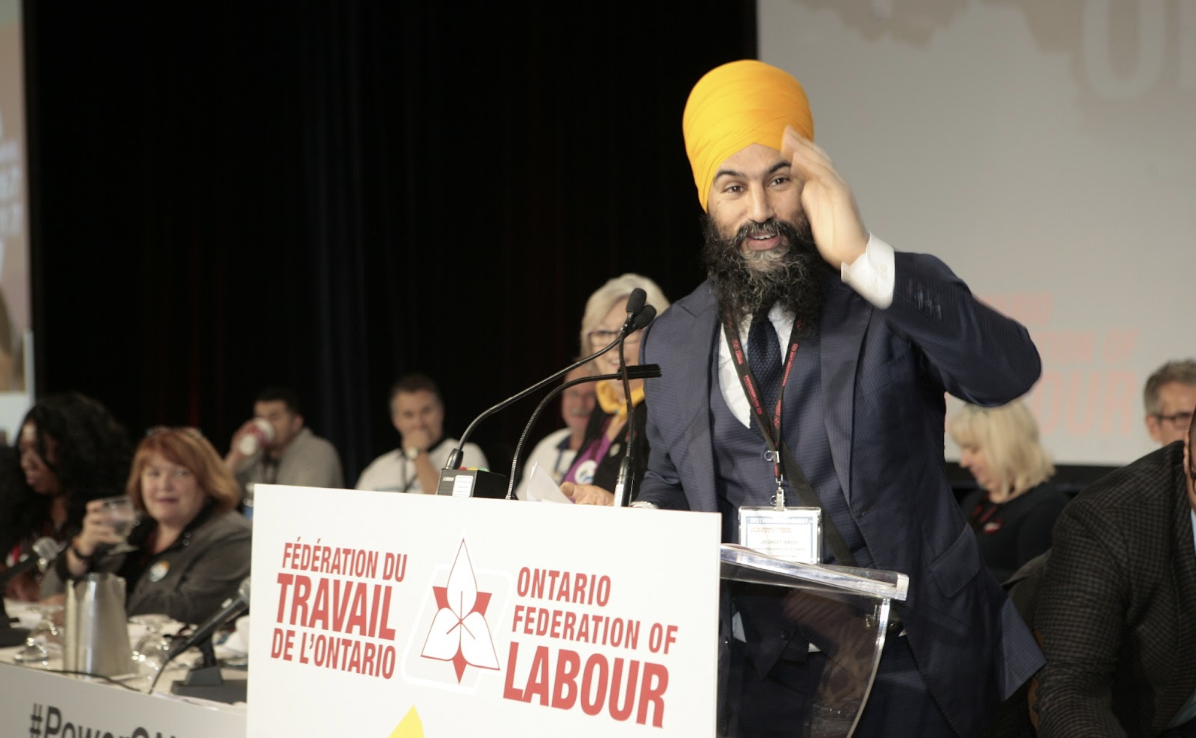
At the upcoming March 2026 Winnipeg Convention, the New Democratic Party of Canada (NDP) will select its next party leader. This race comes after the party’s previous leader, Jagmeet Singh, lost in his riding of Burnaby-Central in the April 2025 federal election, effectively stripping him of his seat in the House of Commons. This ultimately led to Singh’s resignation, one of the many devastating losses for the party after the election.
The New Democrats, entering the race with twenty-five seats from the 2021 federal election, finished with only seven elected representatives. This resulted in their loss of official party status, as the New Democrats did not meet the minimum of twelve seats. The party now faces the daunting task of electing a new leader while attempting to rebuild after this historic collapse. Will this open opportunity bring success to the party, or will newfound leaders crumble under political pressure?
A Look Back at the NDP’s Rise and Decline
The New Democratic Party (NDP) was founded in 1961 through a merger of the Co-operative Commonwealth Federation and the Canadian Labour Congress. The Party has typically placed itself to the left of the Liberal Party, supporting social programs, labour rights, and an internationalist foreign policy.
Federally, the NDP has yet to form government, oscillating between being the third or fourth largest party represented in the House of Commons. However, the successful “Orange Wave” came in 2011 when, for the first time in History, the New Democrats became the official opposition. Under Jack Layton, the party achieved representation of one hundred and three seats and thirty per cent of the popular vote.
Subsequent elections saw immediate declines. In 2019, with the rise of the Bloc Québécois party, the NDP finished in fourth place, holding only twenty-four seats—a seventy-seven per cent drop in eight years.
New Democrats Fall Victim to Polarization
Now, why has the NDP suffered such an extreme loss this past election? The party’s failure to deliver results in numbers is not only attributed to Jagmeet Singh’s low favourability score.
In recent years, Canadian Politics have become increasingly polarized, with thirty-six per cent of Canadians describing themselves as “political orphans” who find all parties to be too extreme. This sense of unalignment with the current Canadian parties could be a reason for the lack of NDP favourability, as fifty-eight per cent of NDP voters claim they do not have a political option that represents their views.
Polarization has also led Canadians to vote strategically, supporting the party most likely to win against the one they do not want in power. For Canada, this means voting for either the Liberal Party or the Conservative Party. As Trump’s tariff announcement became a pressing issue during the 2025 election, many left-leaning voters swayed towards the Liberals’ economically savvy candidate, Mark Carney. In contrast, the working class leaned towards the Conservative Pierre Poilievre, as his populist campaign appealed to Canadians facing rising living costs.
Can New Leadership Spark an NDP Revival?
Although a significant reason for the NDP’s federal losses is attributed to strategic voting, a strong leader who can appeal to voters across Canada will be crucial to the New Democrats in their rebuild. As the 2011 Orange Wave is directly attributed to Jack Layton’s political priorities and personability, finding a leader who can reinstate this foundation could ultimately lead the party to great success.
So far, the leadership candidates of the New Democratic Party show promise. Among the early contenders are individuals who reflect the party’s diverse identities, from long-standing political families to grassroots union leaders. Each of the candidates offers their own individual qualities that could be advantageous for the party’s future.
Avi Lewis comes from a long line of New Democratic leaders. Most notable is his grandfather, David Lewis, one of the co-founders of the NDP, who served as their federal leader from 1971 to 1975. Additionally, his father, Stephen Lewis, was leader of the Ontario NDP from 1970 to 1978. Although Avi Lewis was unable to secure a seat, his 2021 campaign for the West Vancouver-Sunshine Coast-Sea to Sky Country district was still considered a success. The riding saw its best results in history for an NDP candidate, with Lewis garnering twenty-six per cent of the vote. Lewis’s success in numbers, along with his name recognition, could make him a competitive candidate for the upcoming leadership election.
However, what Lewis lacks in political experience, leadership candidate Heather McPherson makes up for with years of parliamentary involvement. Since 2019, McPherson has held her seat in the House of Commons representing the Edmonton-Strathcona riding. She is currently the only non-Conservative representative in Alberta, and one of the seven NDP representatives who managed to stay in the House this past election. On this basis, McPherson is considered a frontrunner in the Leadership race, with her platform aiming to lower costs and bridge the political divide across Canada.
In a recent development, Rob Ashton, President of the International Longshore and Warehouse Union Canada (ILWU), announced his candidacy for the leadership of the New Democrats. Although Ashton holds no prior political experience within the NDP party, his stance on supporting working-class individuals could lead to his success in the campaign.
Ashton was one of the few people who originally voiced concern for the NDP, explaining that the supply-and-confidence agreement backing the Liberals had worked against the party, steering it further away from its New Democrat roots. Ashton claims that the success of the NDP relies on the votes of working-class people. And now more than ever, these voters are “running towards the Conservative Party.” Although Rob Ashton might not currently be a frontrunner, his aim to bring the NDP back to its beginnings of prioritizing workers might just be what this fragile party needs.
Edited by Catvy Tran
The argument defended in this article is solely that of the author and does not reflect the position of the McGill Journal of Political Science, the Political Science Students’ Association, or the McGill Department of Political Science.
Featured Image by OFL Communications Department
